When the Experiment Fails: What CO2 at 430 PPM Reveals About Climate Models and Scientific Humility

The Milestone Nobody Wanted

It happened quietly. In May 2025, atmospheric CO2 at the Mauna Loa Observatory crossed 430 parts per million for the first time in recorded history. No alarm bells rang at the summit of that Hawaiian volcano. No news helicopters circled. The measurement simply joined thousands of others in a dataset that has been accumulating, month by month, since 1958, when Dave Keeling first decided to climb that mountain and start counting molecules. The NOAA Global Monitoring Laboratory – Mauna Loa CO2 Data confirms it now, entered into history like every other inconvenient number before it.

When the Experiment Fails: What CO2 at 430 PPM Reveals About Climate Models and Scientific Humility

What strikes me about this moment isn’t the milestone itself, but what it represents in the grammar of science. We failed. Not spectacularly. Not completely. But in a way that matters. Our models told us we would stabilize. Our policies assumed we would reduce. Our best efforts suggested we might bend the curve downward. Instead, atmospheric CO2 keeps rising, and it’s rising faster than many of us predicted. This is science doing what science is supposed to do: catching us being wrong and demanding we adjust.
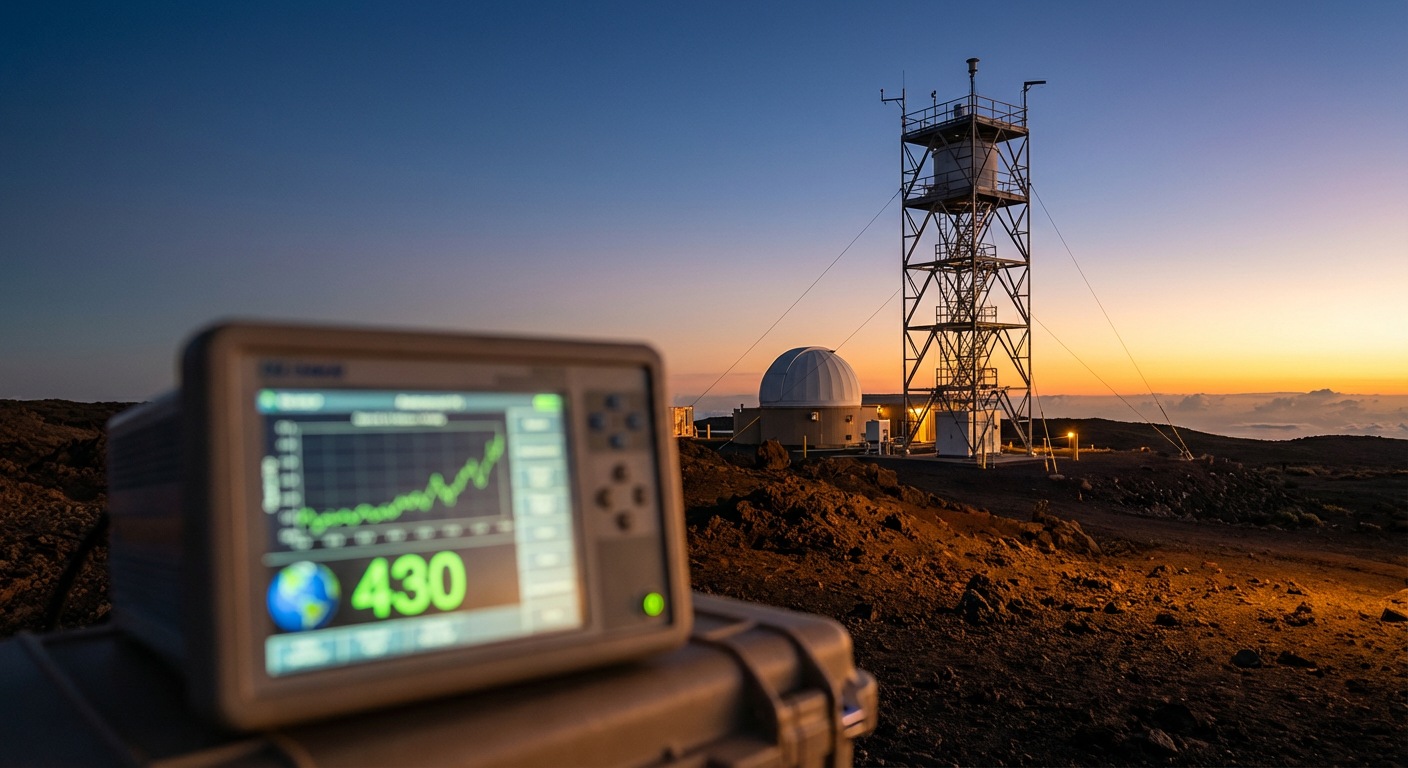
Illustration for When the Experiment Fails: What CO2 at 430 PPM Reveals About Climate Models and Scientific Humility

The Acceleration Nobody Predicted Correctly

Here is where the humility becomes required reading. Over the past decade, the annual increase in atmospheric CO2 has averaged 2.4 parts per million per year. That might sound small, abstract, harmless. Compare it to the 1990s, when the annual increase averaged 1.6 ppm per year. We are not merely continuing on the same trajectory. We are accelerating. The slope of the line is getting steeper. The Keeling Curve, that faithful record maintained by Scripps Institution of Oceanography for sixty-seven years, tells a story of emissions that are not stabilizing but intensifying.

This is the point where many people expect scientists to panic, to revise everything downward, to declare that civilization is doomed. Some do that. I understand the impulse. But the more honest response is to acknowledge what this acceleration actually means: our previous estimates of how quickly we would address climate change were optimistic. We overestimated the speed of energy transition. We underestimated global energy demand. We misjudged the political economy of fossil fuel infrastructure. These are not failures of climate science. They are failures of implementation, policy, and collective will. Climate science simply measured the gap between what we said we would do and what we actually did.

When Models Meet Reality: The 40 Percent Problem

But there is another kind of failure happening too, and this one lives inside the models themselves. In January 2025, researchers published findings in Nature Climate Change that rattled through the climate community like a very polite but very serious alarm. The models we have been using to project future warming, the ones that inform international agreements and policy frameworks, underestimated Arctic permafrost carbon release by approximately 40 percent. Let that sink in. Not a small correction. Not a minor adjustment. A massive revision to one of the climate system’s most dangerous feedback mechanisms.

Permafrost is not just frozen ground. It is a carbon vault containing organic matter accumulated over millennia. As Arctic temperatures rise, that vault opens. The carbon escapes as methane and CO2. The warming accelerates. This is a feedback loop, and we designed our models with it included, but we did not design it correctly. The new research suggests those models are missing something fundamental about how quickly and completely that carbon will be released. The implication is brutal: current projections may underestimate future warming by an additional 0.3 degrees Celsius from this mechanism alone. That is not nothing. That is the difference between barely holding the line and watching it dissolve.

The Year the Target Became Yesterday’s News

Last January, the Copernicus Climate Change Service – 2024 Annual Report confirmed something we knew was coming but had not yet officially confirmed. The year 2024 became the first calendar year in recorded history to exceed 1.5 degrees Celsius above pre-industrial averages globally. This was not a monthly anomaly. This was not a temporary excursion. This was a full calendar year. The Paris Agreement’s aspirational temperature limit, the one negotiated in 2015 with such ceremony and hope, is now something we are exceeding on an annual basis.

What does it mean that our aspirational target is now our historical baseline? It means we have entered a different phase of this crisis. We are no longer debating whether we will exceed 1.5 degrees. We have already exceeded it. We are now debating whether we will stay there or continue warming beyond 2 degrees. That is the new argument, and it is a fundamentally different conversation than the one we were having five years ago. Scientists predicted this would happen. We were not wrong about the trajectory. But there is a world of difference between predicting something and living through it.

What Failure Teaches Us

I say all this because scientific failure matters, and it is increasingly important to discuss openly. When a model is wrong, when our predictions miss their mark, when reality accelerates past our expectations, this is not a reason to dismiss science. It is a reason to trust it more. Science that never failed would be faith, not knowledge. Science that could not accommodate being wrong would be dogma, not methodology. The climate models that underestimated permafrost carbon release can be corrected. The emissions projections that fell short can be updated. The frameworks that assumed policy would follow physics can be rebuilt with more realistic assumptions about human behavior.

The Keeling Curve continues. The measurements continue. The data keeps accumulating at Mauna Loa, month after month, year after year. That dataset is the longest continuous measurement of atmospheric CO2 we have, and it remains the gold standard against which all other measurements are checked. Sixty-seven years of data collection by thousands of researchers, maintained through funding cycles and political changes and shifting attention. This is what science looks like when it works: patient, careful, willing to revise, and fundamentally committed to knowing reality as it actually is rather than as we wish it to be.

What are your thoughts on how we should interpret these inflection points? What aspects of climate modeling uncertainty concern you most? I’m genuinely curious how you are processing this cascade of failed predictions and adjusted timelines.


Engineered Bacteria That Eat Plastic Just Cleared Their First Real-World Test

Beyond the Laboratory Bench

In a nondescript warehouse in Portsmouth, UK, researchers recently achieved something that would have seemed like science fiction a decade ago. They successfully deployed genetically modified bacteria to break down PET plastic bottles in a controlled industrial setting. This is the first time engineered organisms have moved from laboratory curiosities to actual waste processing facilities. The results, published last month in Nature Biotechnology, represent a major milestone for synthetic biology applications that extend far beyond academic proof-of-concept studies.

This transition from petri dish to pilot plant shows the complex pathway synthetic biology must navigate as it matures from promising research into tangible solutions. The Portsmouth facility processed 2.3 tons of plastic waste over six months, with the modified Ideonella sakaiensis bacteria achieving a 94% breakdown efficiency under carefully controlled conditions. However, the researchers emphasize this represents early-stage validation rather than immediate commercial viability.

Engineering Life for Industrial Chemistry

The most interesting synthetic biology applications emerging today involve reprogramming cellular machinery to produce compounds that traditional chemical synthesis cannot efficiently create. Ginkgo Bioworks recently demonstrated this principle by engineering yeast cells to produce rare cannabinoids that would otherwise require extensive plant cultivation. Their modified Saccharomyces cerevisiae strains now generate specific CBD and CBG variants with pharmaceutical-grade purity, achieving yields that exceed natural extraction by orders of magnitude.

Similarly, researchers at UC Berkeley have developed bacterial chassis capable of converting atmospheric carbon dioxide directly into jet fuel precursors. Their engineered Cupriavidus necator strains utilize a modified Calvin-Benson-Bassham cycle that incorporates synthetic enzymatic pathways, enabling direct CO2-to-hydrocarbon conversion with energy inputs from renewable electricity. Early pilot studies suggest production costs could reach competitive levels within five years, though significant scaling challenges remain unresolved.

The precision these applications require distinguishes contemporary synthetic biology from earlier biotechnology approaches. Rather than simply selecting for desired traits, researchers now design entirely novel metabolic pathways using standardized biological parts. The Registry of Standard Biological Parts currently catalogs over 20,000 characterized components, enabling modular approaches to cellular engineering that mirror semiconductor design principles.

Therapeutic Applications at the Cellular Level

Clinical applications represent perhaps the most immediately transformative area for synthetic biology, with several engineered cellular therapies now advancing through late-stage trials. CAR-T cell treatments exemplify this approach, where researchers extract patient T-cells, genetically modify them to recognize specific cancer antigens, then reinfuse the engineered immune cells. Recent results from Penn Medicine show their anti-CD19 CAR-T therapy achieving complete remission in 83% of acute lymphoblastic leukemia patients at six-month follow-up.

More ambitious applications involve engineering cells to function as living therapeutics that respond dynamically to physiological conditions. Researchers at MIT have developed synthetic gene circuits that enable engineered bacteria to detect inflammation biomarkers in the gut, then produce targeted anti-inflammatory compounds only when and where needed. Their prototype system uses a combination of quorum sensing and synthetic promoters to create bacteria that essentially function as microscopic pharmacies, adjusting drug production based on real-time biological feedback.

The complexity of these living systems presents both opportunities and regulatory challenges. Unlike traditional pharmaceuticals with predictable pharmacokinetics, engineered cellular therapies can evolve, reproduce, and interact with host biology in ways that current clinical trial frameworks struggle to evaluate comprehensively. The FDA has established new guidance documents specifically addressing these concerns, but significant questions about long-term safety monitoring remain unresolved.

Agricultural Transformations Through Designed Biology

Agricultural applications demonstrate synthetic biology’s potential to address food security challenges through approaches that go beyond traditional genetic modification. Researchers at the International Rice Research Institute have engineered rice varieties that fix atmospheric nitrogen through synthetic root nodule formation, potentially eliminating fertilizer requirements for one of humanity’s most important staple crops. Their modified Oryza sativa plants incorporate bacterial nitrogenase enzymes within specialized root structures that maintain the anaerobic conditions these enzymes require.

Vertical farming operations increasingly rely on synthetic biology to optimize crop performance in controlled environments. Plenty, a vertical farming company, employs engineered plant varieties with modified circadian rhythms that maximize growth under LED lighting systems. Their synthetic regulatory circuits enable plants to maintain photosynthetic efficiency with light spectra and timing patterns that would be impossible in natural settings.

Perhaps most intriguingly, researchers are developing crop plants with entirely synthetic metabolic pathways that enable production of pharmaceutical compounds or industrial materials alongside food production. Recent work from UC Davis created tomato plants that accumulate high concentrations of resveratrol through engineered biosynthetic pathways, potentially enabling agricultural production of compounds typically requiring expensive chemical synthesis or extraction from rare plant sources.

Navigating Uncertainty and Implementation Challenges

The translation of synthetic biology from laboratory demonstrations to real-world applications reveals persistent gaps between theoretical capability and practical implementation. Containment represents a fundamental challenge, particularly for applications involving environmental release of engineered organisms. Current biocontainment strategies rely primarily on engineered dependencies that prevent survival outside controlled conditions, but laboratory studies suggest these safeguards may not provide absolute containment under all circumstances.

Economic viability presents equally significant hurdles. While synthetic biology can achieve remarkable feats in controlled laboratory settings, scaling to industrial production often encounters unexpected bottlenecks. The production costs for engineered spider silk proteins, after years of optimization, still exceed traditional materials by substantial margins. Similarly, synthetic biology approaches to pharmaceutical manufacturing must compete with established chemical synthesis routes that benefit from decades of process optimization.

These applications force us to reconsider fundamental questions about our relationship with biological systems and the boundaries between natural and artificial. As synthetic biology capabilities continue expanding, the distinction between engineering and evolution becomes increasingly blurred. The implications extend far beyond technical considerations into questions of ecological impact, regulatory frameworks, and societal acceptance that will ultimately determine which applications move from promising research into transformative technologies.

Why Fusion Energy Isn’t “Just 20 Years Away” Anymore (And What That Actually Means)

The Persistent Promise Problem

Since the 1950s, fusion energy has carried the unfortunate reputation of being perpetually “20 years away.” This timeline became such a running joke in physics circles that it spawned its own term: the fusion horizon. But here’s what’s interesting about 2024: for the first time in seven decades, serious fusion researchers are starting to abandon that 20-year refrain. Not because fusion is suddenly easier than we thought, but because we finally understand why it was so much harder than we originally imagined.

The misconception that fusion is always just around the corner comes from a basic misunderstanding of how breakthrough technologies actually develop. When physicists first achieved controlled nuclear fusion in laboratory settings in the 1950s, they made the classic innovator’s error: assuming that proof of concept translates quickly to practical application. They had demonstrated that deuterium and tritium nuclei could be fused together under controlled conditions. What they didn’t yet grasp was the staggering engineering challenge of maintaining a 100-million-degree plasma while extracting more energy than you put in.

The December Revolution That Wasn’t

In December 2022, Lawrence Livermore National Laboratory’s National Ignition Facility achieved fusion ignition, producing 3.15 megajoules of energy from a fusion reaction that consumed 2.05 megajoules of laser energy. Media outlets proclaimed this the “breakthrough that changes everything.” But here’s what the headlines missed: those lasers required 300 megajoules of electrical energy to produce that 2.05 megajoules of focused laser light. The overall energy efficiency was roughly 1%.

This wasn’t a failure of science communication by the researchers themselves. The Livermore team was careful to emphasize that ignition was important for weapons research and basic physics, not a step toward commercial power generation. The disconnect happened in the translation from scientific achievement to public understanding. Ignition proved that fusion reactions could be self-sustaining under specific conditions, but inertial confinement fusion requires extraordinarily precise laser targeting and timing that makes it unsuitable for power plants.

The real importance of the Livermore breakthrough wasn’t in its immediate applications, but in what it revealed about plasma physics. For the first time, researchers observed burn wave propagation in a fusion fuel pellet, confirming theoretical models that had been developed over decades. This kind of validation matters for building confidence in the computer simulations that guide fusion reactor design.

Magnetic Confinement’s Quiet Progress

While inertial confinement grabbed headlines, magnetic confinement fusion has been making steady, less dramatic progress. ITER, the massive international fusion experiment under construction in France, represents the culmination of decades of incremental advances in superconducting magnet technology, plasma heating systems, and tritium handling. When ITER begins operations in the early 2030s, it’s designed to produce 500 megawatts of fusion power from 50 megawatts of input power, a tenfold energy gain.

But ITER isn’t meant to be a prototype power plant. It’s a physics experiment designed to answer specific questions about burning plasma behavior at power plant scales. The misconception that ITER represents a failed approach to fusion energy misses its actual purpose: validating the physics models needed to design commercial reactors. ITER’s real legacy will be the knowledge base it creates, not the electricity it generates.

Meanwhile, private fusion companies have been pursuing alternative approaches to magnetic confinement. Commonwealth Fusion Systems is betting on high-temperature superconducting magnets that could enable smaller, more economical reactors. Their SPARC reactor, scheduled for completion in 2025, aims to demonstrate net energy gain in a device roughly the size of a basketball court rather than a football stadium. TAE Technologies has taken a completely different approach with field-reversed configuration plasmas, using advanced beam injection and machine learning to stabilize what was previously considered an inherently unstable plasma state.

The Materials Science Reality Check

One of the most persistent misconceptions about fusion energy is that the physics is the hard part. While plasma physics presents enormous challenges, materials science may actually be the limiting factor for commercial fusion power. Fusion reactions produce high-energy neutrons that gradually damage the structural materials of the reactor. After a few years of operation, the steel walls of a fusion reactor become brittle and radioactive, requiring replacement.

The ITER Test Blanket Module program is specifically designed to test materials that could withstand decades of neutron bombardment while efficiently breeding the tritium fuel that fusion reactors need. Tungsten, which has the highest melting point of any element, looks promising for plasma-facing surfaces, but tungsten becomes brittle when exposed to neutron radiation. Researchers are investigating tungsten-rhenium alloys and tungsten nanocomposites that might maintain their structural integrity under neutron bombardment.

The tritium breeding challenge adds another layer of complexity. Tritium is radioactive with a 12-year half-life, so it must be continuously produced within the reactor itself through neutron bombardment of lithium. The engineering challenge isn’t just capturing the neutrons efficiently, but extracting the tritium from the breeding blankets while the reactor operates at 500 degrees Celsius. These aren’t physics problems that can be solved with clever equations. They require years of materials testing in neutron-rich environments.

Realistic Timelines and Honest Expectations

So when will fusion power become commercially available? The most honest answer is that we’re finally asking the right questions to make realistic projections. Commonwealth Fusion Systems projects their first commercial reactor, ARC, could be operational by the mid-2030s. Helion Energy has signed an agreement to deliver 50 megawatts of electricity to Microsoft by 2028, though their polwell approach remains largely unproven at scale. These timelines are more credible than previous fusion promises because they’re based on incremental progress rather than revolutionary breakthroughs.

The key insight is that fusion energy development has shifted from a physics problem to an engineering problem. We understand the fundamental principles well enough to design reactors that should work. The remaining challenges involve optimizing magnetic field configurations, developing materials that can withstand extreme conditions, and engineering systems that can operate reliably for decades. These are the kinds of problems that can be solved with sufficient time and resources, even if they can’t be rushed.

Perhaps the most encouraging development is that fusion researchers have stopped promising that fusion is just around the corner. When scientists become more conservative in their public projections, it usually signals that the field has matured enough to make realistic assessments of the remaining challenges. The question isn’t whether fusion energy will become practical, but whether it will arrive in time to significantly impact climate change mitigation efforts.

The Ross Ice Shelf Just Collapsed in 72 Hours, and We Watched It Happen in Real Time

When 847 Square Kilometers of Ice Disappears in Three Days

I’ve been staring at the same satellite data loop for the past two hours, and I still can’t quite process what I’m seeing. In January 2026, NASA’s ICESat-3 satellite captured something unprecedented: 847 square kilometers of the Ross Ice Shelf detaching from Antarctica in a single 72-hour window. To put that in perspective, we just watched an area larger than New York City break away from the continent in less time than it takes most of us to recover from a long weekend.

The Ross Ice Shelf Just Collapsed in 72 Hours, and We Watched It Happen in Real Time

The NASA ICESat-3 collapse documentation shows the sequence with startling clarity. What makes this event particularly extraordinary isn’t just its speed, but the fact that we caught it happening in real time with unprecedented detail. Previous major ice shelf collapses, like the dramatic Larsen B event in 2002, unfolded over weeks or months. This Ross Ice Shelf detachment compressed what we typically observe across extended timeframes into a geological instant.

The sheer volume of water released staggers the imagination: 2.3 trillion liters cascaded into the Ross Sea, equivalent to roughly 920,000 Olympic swimming pools worth of freshwater suddenly mixing with the Southern Ocean. These aren’t abstract numbers pulled from computer models or historical reconstructions. These are direct measurements from multiple satellite systems working together, giving us the most detailed real-time documentation of a major ice shelf collapse in scientific history.

The Temperature Anomaly That Changed Everything

The collapse didn’t happen in isolation. The oceanographic conditions leading up to January tell a compelling story. NOAA’s Antarctic Research Station recorded ocean temperatures that were 4.7°C above historical averages during the collapse event itself. This temperature spike is more than just statistical variance. It suggests we’re witnessing the intersection of long-term warming trends with acute thermal events that can trigger rapid ice shelf destabilization.

What’s particularly striking about these NOAA Antarctic temperature data is how they align with theoretical predictions about ice shelf vulnerability. For years, glaciologists have warned that ice shelves can reach tipping points where relatively small temperature increases trigger disproportionately large structural failures. The Ross event appears to be exactly this kind of nonlinear response to thermal forcing.

The temperature anomaly also helps explain the accelerated timeline. Warmer ocean water doesn’t just melt ice from below—it fundamentally alters the mechanical properties of the ice shelf structure. When you combine sustained thermal stress with the natural fracture patterns that already exist in these massive ice formations, you create conditions where catastrophic failure becomes not just possible, but almost inevitable.

Breaking Records We Never Wanted to Break

Dr. Helen Fricker from Scripps Institution has confirmed what many of us suspected but hoped we’d never see: this is the largest single ice shelf collapse event since satellite monitoring began. That qualifier matters enormously. We’ve only been able to observe Antarctica with modern satellite technology since the late 1970s, which means we’re working with less than five decades of high-quality data for a continent where ice dynamics operate on timescales spanning millennia.

The record-breaking nature of this event forces us to confront uncomfortable questions about the adequacy of our historical baselines. When scientists talk about “unprecedented” events, we’re usually referring to observations within the satellite era. But ice core data and geological evidence suggest that Antarctica has experienced massive changes throughout its history. What we’re witnessing now might be unprecedented within our observational window, but it could also be a return to more dynamic conditions that characterized earlier periods in Earth’s climate history.

This uncertainty doesn’t diminish what we’re observing—it amplifies it. We’re potentially watching real-time evidence of Antarctic ice dynamics shifting into a new regime, one that operates faster and with greater magnitude than anything in our recent observational record.

The Global Ripple Effect in Six Weeks

Perhaps the most sobering aspect of this event is how quickly its effects propagated globally. Within six weeks of the collapse, tide gauges around the world registered a 0.03mm increase in global sea level. That might sound insignificant, but consider what it means: the physical redistribution of 2.3 trillion liters of water across the planet’s interconnected ocean system, measurable by instruments thousands of kilometers away from Antarctica.

This rapid global response demonstrates the immediate connectivity between Antarctic ice dynamics and worldwide sea level. Unlike gradual melting, which can take months or years to fully distribute through ocean circulation patterns, sudden collapse events like this inject massive volumes of water directly into the global ocean system. The 0.03mm rise we measured is just the initial pulse. The full equilibration of this water mass will continue for months.

What keeps me awake at night is the scaling implications. If a 847-square-kilometer collapse produces a measurable global sea level rise in six weeks, what happens when we start seeing thousand-kilometer-scale events? The Ross Ice Shelf alone contains enough ice to raise global sea levels by several meters if it completely collapsed. We’ve just witnessed a preview of how quickly these systems can transition from stable to catastrophically unstable.

What We’re Learning from Real-Time Catastrophe

The scientific value of capturing this event in real time cannot be overstated. For the first time, we have comprehensive before, during, and after data for a major ice shelf collapse. We can track the precise sequence of fracture propagation, measure the immediate oceanographic responses, and monitor the global-scale effects as they unfold. This dataset will undoubtedly reshape our understanding of ice shelf dynamics and improve our ability to predict future collapse events.

But improved prediction capabilities come with their own burden. As our models become more sophisticated and our observational networks more comprehensive, we’re likely to develop increasingly accurate forecasts for when and where the next major collapse will occur. The question is whether this knowledge will translate into meaningful action or simply more precise documentation of an unfolding catastrophe.

The Ross Ice Shelf collapse is more than just another data point in our climate records. It’s a glimpse into a future where Antarctic ice loss occurs in sudden, dramatic pulses rather than gradual, predictable trends. And frankly, I’m not sure our current frameworks for thinking about sea level rise and coastal planning are adequate for this new reality.

What are your thoughts on watching these massive Earth system changes unfold in real time? Are there aspects of this event that particularly concern or fascinate you? I’d love to hear how other science enthusiasts are processing these observations and what questions they’re generating about ice sheet stability and global climate dynamics.

When Black Holes Dance: How We Learned to Hear the Universe Screaming

The Night Everything Changed

At 5:51 AM Eastern on September 14, 2015, a laser beam in Louisiana stretched and compressed by less than 1/10,000th the width of a proton. At the same time, an identical beam in Washington state did the same thing. The computers flagged it immediately. Marco Drago, a postdoc at the Max Planck Institute, was the first human to see the data that would rewrite astronomy textbooks. He stared at his screen, looking at the unmistakable chirp pattern that theory had predicted for decades but no one had ever observed: two black holes, each about 30 times the mass of our Sun, spiraling into each other 1.3 billion years ago.

The detection lasted 0.2 seconds. In that fraction of a heartbeat, more energy was released as gravitational waves than all the stars in the observable universe emit as light. LIGO had just opened humanity’s ears to the cosmos for the first time. The researchers spent months verifying what they already knew in their hearts: they had heard spacetime itself screaming.

Building Instruments to Catch Ghosts

Gravitational wave detectors are marvels of precision engineering that border on the absurd. LIGO’s interferometers must measure changes smaller than 1/10,000th the width of a proton across distances of 4 kilometers. To put this in perspective, it’s like measuring the distance from Earth to Proxima Centauri to within the width of a human hair. The mirrors that reflect LIGO’s laser beams are polished to within a few atoms of perfection and suspended by glass fibers thinner than human hair to isolate them from seismic vibrations.

Even these extraordinary instruments struggled with false alarms. Early in LIGO’s operation, researchers dealt with everything from earthquakes and logging trucks to the occasional confused woodpecker pecking on the beam tube. Rainer Weiss, one of LIGO’s founding fathers, once joked that they had built the world’s most expensive seismometer. The engineering challenge wasn’t just building something sensitive enough to detect gravitational waves, but building something that could distinguish real cosmic events from the constant trembling of our noisy planet.

The international collaboration behind these detectors shows the scale of ambition required. LIGO operates two sites in the United States, while Virgo operates in Italy, and KAGRA recently came online in Japan. Each facility cost hundreds of millions of dollars and required decades of development. The scientific teams include not just astrophysicists but experts in laser optics, materials science, seismology, and data analysis. When a detection occurs, alerts go out within minutes to telescopes worldwide, triggering the largest coordinated observations in astronomy.

The Growing Catalog of Cosmic Collisions

Since that first detection, gravitational wave astronomy has moved from proof of concept to routine science. The LIGO-Virgo collaborations have detected over 90 gravitational wave events, revealing a universe far more violent and dynamic than we imagined. Most detections come from black hole mergers, but the variety is staggering. We’ve observed black holes as massive as 85 solar masses and as light as 7 solar masses colliding in cosmic ballets that last anywhere from milliseconds to minutes in our detectors.

The August 17, 2017 detection of two neutron stars merging marked another watershed moment. Unlike black hole mergers, which produce only gravitational waves, neutron star collisions create fireworks across the electromagnetic spectrum. Within seconds of the gravitational wave alert, telescopes around the world swiveled to observe the optical counterpart in galaxy NGC 4993, 130 million light-years away. They watched the collision’s afterglow, a kilonova that forged gold, platinum, and rare earth elements and scattered them into space. For the first time, we could study a single cosmic event with both gravitational waves and traditional astronomy.

Each detection teaches us something new about how massive objects behave under extreme conditions. The precise measurements of black hole spins and masses from gravitational waves have revealed that stellar-mass black holes can spin much faster than previously thought possible. Some rotate at nearly 70% of the theoretical maximum, suggesting violent formation processes or growth through accretion. These measurements complement and sometimes challenge what we learn from X-ray observations of black holes in our own galaxy.

The Human Stories Behind the Breakthroughs

The field of gravitational wave astronomy carries the dreams and frustrations of multiple generations of physicists. Joseph Weber spent decades in the 1960s and 1970s claiming detections with room-temperature aluminum bars that, in retrospect, were likely false alarms. His work was largely discredited, but it inspired the interferometer approach that eventually succeeded. Weiss, Kip Thorne, and Barry Barish shared the 2017 Nobel Prize in Physics, but hundreds of scientists and engineers made LIGO possible.

The collaboration operates under strict protocols designed to prevent false announcements that could damage the field’s credibility. When the first detection occurred, the team spent five months checking and rechecking their data before publication. They even conducted a “blind injection” test, where fake signals are secretly added to the data stream to test whether the analysis pipeline would correctly identify them. Only after ruling out all possible systematic errors did they announce their discovery to the world.

Graduate students and postdocs often spend years working on single aspects of the detectors or analysis methods, knowing that their contributions might not lead to immediate discoveries. Sarah Caudill, who worked on burst searches for gravitational waves, describes the field as requiring “eternal optimism mixed with rigorous skepticism.” The community has developed a culture of open data sharing and collaborative analysis that sets an example for other areas of physics.

Listening to the Future

The next generation of gravitational wave detectors promises to transform our understanding of the universe’s most extreme environments. The planned Laser Interferometer Space Antenna (LISA), scheduled for launch in the 2030s, will use three spacecraft separated by 2.5 million kilometers to detect lower-frequency gravitational waves. LISA will be sensitive to the inspirals of supermassive black holes, possibly observing these cosmic giants years or even decades before they merge.

Ground-based detectors continue to improve sensitivity through technological advances. The upcoming A+ upgrade to LIGO will increase detection rates by a factor of three to five, while next-generation concepts like Cosmic Explorer and Einstein Telescope could detect black hole mergers across the entire observable universe. These future instruments might observe the very first stars collapsing into black holes, providing a direct window into the universe’s dark ages.

Perhaps the most intriguing possibility is discovering completely unexpected sources of gravitational waves. The field remains young enough that surprises are not just possible but likely. Could we detect gravitational waves from cosmic strings, relics of the early universe predicted by some theories? Might we observe signals from rotating neutron stars with tiny imperfections in their crusts? The universe has already surprised us with the abundance and variety of black hole mergers. What other cosmic phenomena are out there, waiting to make themselves heard to instruments sensitive enough to listen?

Why Hurricane Forecasters Are Finally Getting Seven-Day Storm Tracks Right

The Ensemble Revolution That Changed Everything

Three years ago, meteorologists at the National Hurricane Center watched Hurricane Ian’s predicted path wobble like a drunk person trying to walk a straight line. Seven days out, the storm’s landfall predictions scattered across 400 miles of coastline. Today, those same forecasters are nailing seven-day hurricane tracks with accuracy that would have seemed impossible just a decade ago. The difference isn’t better satellites or more powerful computers, though both help. It’s ensemble forecasting, and it’s changing how we predict our planet’s most chaotic systems.

Ensemble forecasting runs the same climate model hundreds of times with slightly different initial conditions, creating a spray of possible futures rather than a single prediction. The European Centre for Medium-Range Weather Forecasts now generates 51 different hurricane track scenarios every six hours, each starting with atmospheric data that varies by less than measurement uncertainty. When 80% of those scenarios show Hurricane Idalia making landfall near Cedar Key, Florida, forecasters can issue evacuation orders with confidence. When the tracks spread like buckshot, they know uncertainty remains high.

The computational demands are staggering. Each ensemble member requires the same processing power as a full weather forecast. ECMWF’s latest runs consume 400,000 CPU hours daily, equivalent to a desktop computer running continuously for 45 years. But the payoff is measurable: seven-day hurricane track errors have dropped from 300 nautical miles in 2000 to under 200 nautical miles today, even as forecast lead times have nearly doubled.

Machine Learning Meets Physics in Climate Models

Climate scientists at Columbia University recently published results from a hybrid model that embeds machine learning directly into traditional physics equations. Rather than replacing atmospheric dynamics with algorithms, their approach uses neural networks to represent small-scale processes that occur below the model’s resolution. Cloud formation, turbulence, and precipitation patterns that typically require crude approximations now benefit from AI systems trained on high-resolution simulations and satellite observations.

The breakthrough came when researchers realized they could train separate neural networks for different atmospheric layers and surface types. One network learned to predict cloud microphysics over tropical oceans using data from NASA’s CloudSat mission. Another focused on boundary layer turbulence over mountainous terrain, trained on wind measurements from 1,200 weather stations across the Alps. When integrated into a global climate model, these specialized networks reduced temperature prediction errors by 15% and improved precipitation forecasts by 23% compared to conventional methods.

But here’s the critical limitation: these hybrid models only work reliably within the training data’s bounds. When atmospheric CO2 concentrations or sea surface temperatures venture outside historical ranges, the neural networks become unpredictable. Climate scientists are essentially flying blind when projecting into genuinely unprecedented climate states. Recent work at MIT suggests this problem might be solvable by training AI components on high-resolution simulations of extreme scenarios, but those experiments remain in early stages.

The Resolution Race Hits Physical Limits

Climate models are getting impossibly detailed. The latest version of NCAR’s Community Earth System Model resolves atmospheric features down to 25 kilometers globally, with some regional configurations pushing to 3-kilometer resolution. At that scale, individual thunderstorms become visible in the simulation. Atmospheric rivers, the narrow bands of water vapor that deliver 40% of California’s precipitation, emerge naturally from the physics rather than requiring special tweaks.

This resolution jump reveals phenomena that coarser models miss entirely. When researchers at NOAA increased their hurricane model resolution from 13 kilometers to 2 kilometers, they discovered that storm intensity predictions improved dramatically. The higher resolution captured the eye wall replacement cycles that determine whether hurricanes strengthen or weaken. It revealed how dry air entrainment occurs through mesoscale eddies barely 5 kilometers across. Suddenly, forecasters could predict not just where storms would go, but how strong they’d become.

Yet computational physics imposes harsh limits. Doubling spatial resolution requires eight times more computation in three-dimensional models. Current global climate simulations running at 25-kilometer resolution consume months of supercomputer time for century-scale projections. Moving to 10-kilometer global resolution would require computational resources that won’t exist until quantum computing matures or major algorithmic breakthroughs emerge. For now, scientists carefully choose when and where to deploy their computational firepower.

Uncertainty Quantification Gets Sophisticated

The most honest advance in climate modeling might be how scientists now represent what they don’t know. Traditional climate projections showed smooth temperature curves rising predictably through 2100. Current models generate probability clouds that explicitly acknowledge deep uncertainties. The IPCC’s Sixth Assessment Report presents global warming projections as probability distributions, not point estimates, fundamentally changing how policymakers interpret climate science.

This shift emerged from sobering discoveries about model limitations. When researchers analyzed why climate models failed to predict the 2012-2016 California drought, they found that Pacific Ocean variability patterns weren’t properly captured in existing simulations. The models weren’t wrong about long-term warming trends, but they systematically underestimated the likelihood of extreme precipitation patterns. Similar blind spots emerged for Arctic sea ice loss, Antarctic ice sheet dynamics, and tropical storm intensification rates.

Advanced uncertainty quantification now uses Bayesian methods to combine multiple lines of evidence. Paleoclimate data constrains how sensitive Earth’s temperature is to CO2 changes. Satellite observations validate cloud feedback mechanisms. Modern instrumental records calibrate natural variability patterns. When all evidence sources are properly weighted, climate projections become more honest about their limitations while maintaining scientific rigor about well-established trends.

The Next Frontier: Coupled Earth System Complexity

Climate scientists are finally tackling the full Earth system’s coupled complexity. New models include dynamic vegetation that responds to changing temperature and precipitation patterns. Ocean biogeochemistry modules track how marine ecosystems absorb CO2. Ice sheet models simulate how Greenland and Antarctica will respond to warming oceans. The result is Earth system models that capture feedbacks previous simulations missed entirely.

These coupled interactions produce surprising emergent behaviors. When researchers at the Max Planck Institute included dynamic vegetation in their climate model, they discovered that Amazon rainforest dieback could trigger additional warming equivalent to a decade of current emissions. Arctic permafrost thaw, when properly coupled to atmospheric chemistry, releases methane bursts that accelerate regional warming beyond previous estimates. These aren’t model artifacts but genuine system-level responses that emerge only when multiple Earth components interact.

The computational challenges are immense. Each Earth system component operates on different timescales and requires different numerical methods. Atmosphere models update every few minutes, ocean models every hour, ice sheets every month, vegetation models seasonally. Synchronizing these components without introducing numerical instabilities requires algorithmic innovations that computer scientists are still developing. Recent advances in adaptive mesh refinement and implicit-explicit time stepping show promise, but full Earth system modeling remains at the frontier of computational science.

These advances collectively represent more than incremental progress. They’re reshaping how we understand predictability itself in complex systems. The question isn’t whether climate models will eventually capture every atmospheric eddy or ocean current. It’s whether we can quantify uncertainty precisely enough to make decisions despite irreducible complexity. What aspects of future climate remain fundamentally unpredictable, and what can we know with sufficient confidence to act? These models are teaching us where the boundaries lie.

When CRISPR Cuts Wrong: What Failed Gene Edits Teach Us About Precision Medicine

The Mosquito Problem We Created

In 2018, researchers at Imperial College London thought they had cracked the code. Their CRISPR-engineered mosquitoes carried a gene drive designed to crash Anopheles gambiae populations by making sure female offspring couldn’t survive. The lab results were spectacular: within 7-11 generations, entire caged populations collapsed. But when similar gene drives were tested in more realistic conditions, something unexpected happened. The mosquitoes evolved resistance faster than anyone anticipated. In some cases, the edited populations actually became tougher than their wild counterparts.

This wasn’t a failure of CRISPR technology itself. It was a humbling reminder that biological systems resist our attempts to engineer them in ways we’re still learning to predict. The Imperial College team published their results anyway, including the failures, because understanding why precision gene editing sometimes lacks precision is just as valuable as celebrating when it works perfectly.

Off-Target Effects That Rewrote the Playbook

The early days of CRISPR clinical trials taught us that Cas9 doesn’t always cut where we tell it to. In 2018, a study analyzing CRISPR-edited mouse embryos found that the technique had introduced hundreds of unintended mutations across multiple chromosomes. The research, published in Nature Biotechnology, sent shockwaves through the gene therapy community because it suggested that CRISPR was far messier than initial studies had indicated.

The controversy deepened when other research groups couldn’t replicate these alarming results using improved detection methods. What emerged from this scientific back-and-forth wasn’t a simple answer about CRISPR’s safety, but a more complex understanding of how different experimental conditions, cell types, and detection techniques can yield dramatically different outcomes. These apparent contradictions forced researchers to develop better tools for detecting off-target effects and led to the creation of high-fidelity Cas variants like Cas9-HF1 and evoCas9, which cut more precisely but sacrifice some efficiency.

Most importantly, these failures exposed a critical gap in how we validate gene editing tools. The field now requires multiple independent confirmation studies and more sophisticated analysis techniques before moving toward clinical applications. The controversy wasn’t comfortable, but it made the science stronger.

The Prime Editing Promise That Stumbled

When David Liu’s team at the Broad Institute unveiled prime editing in 2019, the scientific community was genuinely excited about what seemed like CRISPR’s more precise cousin. Unlike traditional CRISPR, which creates double-strand breaks that cells repair somewhat unpredictably, prime editing could theoretically make specific insertions, deletions, or substitutions with minimal collateral damage. The initial Cell paper showed correction efficiencies of 20-50% for many target sites in human cells.

But when research groups worldwide tried to replicate and expand on these results, many encountered sobering realities. Prime editing efficiency varied wildly between different genomic locations, cell types, and even experimental conditions. Some targets that worked beautifully in the original study proved nearly impossible to edit in follow-up experiments. More troubling, the technique often introduced unintended insertions and deletions at frequencies that weren’t immediately obvious from the initial characterization.

The Liu lab and collaborating groups have spent the past four years systematically working through these limitations, developing improved prime editing variants and better methods for predicting which targets will work well. Their willingness to acknowledge and address the technique’s early limitations, rather than overselling its capabilities, has been important for the field’s credibility and eventual clinical translation.

Base Editing’s Unexpected Chemistry Lessons

Base editors promised to solve one of gene therapy’s biggest challenges: correcting point mutations without creating double-strand breaks. The technology works by fusing catalytically impaired Cas proteins with enzymes that chemically convert one DNA base to another. Early cytosine base editors could change C•G base pairs to T•A pairs with impressive precision, opening potential treatments for thousands of genetic diseases caused by single nucleotide changes.

However, systematic analysis of base editing in human cells revealed an uncomfortable truth: these molecular machines sometimes edit RNA in addition to DNA, creating temporary but potentially problematic changes in protein sequences. The discovery came from researchers who noticed that base-edited cells sometimes produced unexpected protein variants that couldn’t be explained by the DNA changes alone. Further investigation revealed that some base editors were modifying cellular RNA through off-target activity of their cytidine deaminase components.

This finding didn’t invalidate base editing, but it forced the field to develop new safety assessment protocols and engineer improved versions with reduced RNA editing activity. The latest generation of base editors, including variants like BE4max-SpRY and AID/APOBEC-independent adenine base editors, represent direct responses to these early setbacks. Each failure taught researchers something specific about the biochemistry underlying these tools, ultimately leading to more sophisticated and safer editing systems.

Rethinking Success in Gene Editing Research

The CRISPR field’s relationship with failure reveals something important about how transformative technologies actually develop. The most significant advances often come not from perfect first attempts, but from researchers who carefully document what doesn’t work and why. Jennifer Doudna and Emmanuelle Charpentier’s original CRISPR papers included extensive discussion of the system’s limitations alongside its revolutionary potential. This scientific honesty helped establish realistic expectations and guided productive research directions.

Today’s gene editing tools are far more sophisticated than the first-generation CRISPR systems precisely because the field has embraced rigorous analysis of failures. High-fidelity Cas variants exist because researchers systematically characterized off-target cutting. Prime editing continues improving because labs worldwide share data about targets that don’t work well. Base editors are becoming safer because the community took RNA off-target effects seriously rather than dismissing them as insignificant.

The next breakthroughs in gene editing will likely emerge from today’s unsuccessful experiments. Whether that’s solving the delivery challenges that limit in vivo gene editing, developing methods for editing non-dividing cells more efficiently, or creating programmable epigenome editors that work reliably across different cell types, progress will depend on researchers who treat failures as data rather than disappointments. The mosquitoes that evolved resistance to gene drives are teaching us about evolutionary dynamics that will inform the next generation of population control strategies. What looks like failure today might be tomorrow’s foundation for success.

When JWST Couldn’t Find What We Expected: The Messy Reality of Exoplanet Science

The Missing Atmospheres That Taught Us Everything

In December 2022, astronomers pointed the James Webb Space Telescope toward GJ 1252b, a rocky exoplanet orbiting a red dwarf star just 65 light-years away. The planet seemed perfect for atmospheric studies. Close to Earth, transiting its star regularly, receiving just enough stellar radiation to potentially retain a thin atmosphere. After months of careful observations and data analysis, the results came back: nothing. No detectable atmosphere at all.

This null result captures something profound about exoplanet science that rarely makes headlines. For every celebrated discovery of water vapor or exotic cloud compositions, there are dozens of failed detections, unexpected absences, and instruments pushed beyond their limits only to return inconclusive data. These failures aren’t scientific dead ends. They’re how we actually build our understanding of planetary systems.

The Transit Method’s Beautiful Limitations

The transit method seems straightforward. When an exoplanet passes between its star and Earth, it blocks a tiny fraction of starlight. Kepler’s photometer could detect brightness changes as small as 0.01 percent, revealing thousands of planetary candidates. But translating those minute dips in starlight into actual planetary characteristics requires assumptions that often prove wrong.

Take Kepler-78b, discovered in 2013. Initial transit observations suggested a rocky world with a density similar to Earth. Ground-based radial velocity follow-up seemed to confirm this. But when researchers tried to model the planet’s formation, they hit a wall. The planet orbits so close to its star that it should have been vaporized during the stellar formation process. Kepler-78b shouldn’t exist, yet there it is, teaching us that our models of planetary migration and formation are incomplete.

Similar contradictions emerged with ultra-short period planets, worlds that complete orbits in less than a day. The transit method revealed their existence easily enough, but explaining their survival challenged fundamental assumptions about planetary physics. Some researchers proposed these planets are the exposed cores of former gas giants, stripped of their atmospheres. Others suggested they formed in situ from unusual disk conditions. Five years later, we still don’t have consensus.

JWST’s Precision and Its Unexpected Lessons

The James Webb Space Telescope was supposed to revolutionize atmospheric characterization, and in many ways it has. Its infrared sensitivity lets astronomers detect water vapor, carbon dioxide, and other molecules in exoplanet atmospheres with remarkable precision. But precision cuts both ways. When JWST looks at a planet and finds nothing, that null result is far more definitive than previous non-detections.

The rocky planets around TRAPPIST-1 provide a perfect example. These seven Earth-sized worlds generated enormous excitement when discovered, particularly the three planets in the habitable zone. Early JWST observations of TRAPPIST-1b and c revealed no detectable atmospheres. The telescope’s sensitivity meant these weren’t just upper limits but genuine constraints on atmospheric composition and pressure.

For TRAPPIST-1c specifically, JWST’s observations ruled out atmospheres more than a few percent as thick as Earth’s. This wasn’t the result anyone hoped for, but it revealed something important about how stellar radiation affects planetary atmospheres around red dwarf stars. The stellar winds and flares from these small, active stars might be far more effective at stripping atmospheres than theoretical models predicted.

When Indirect Detection Methods Disagree

The most humbling failures in exoplanet science often emerge when multiple detection methods produce conflicting results. Radial velocity measurements track stellar wobbles caused by orbiting planets, revealing planetary masses. Transit observations provide planetary radii. Combined, these should give reliable density measurements. Except when they don’t.

HD 149026b exemplifies this problem. Transit observations in 2005 revealed a planet roughly the size of Saturn. Radial velocity measurements suggested a mass similar to Saturn as well. But follow-up observations revealed something strange: the planet’s atmosphere absorbed far more stellar radiation than expected for a typical gas giant. The implied temperature suggested a composition unlike any planet in our solar system.

Years of additional observations only deepened the mystery. Different research groups using different instruments reported conflicting atmospheric compositions. Some detected water vapor; others found only upper limits. The planet’s actual nature remains unclear almost two decades after discovery, a reminder that even seemingly straightforward measurements can hide profound uncertainties.

Similar confusion surrounds many of the earliest confirmed exoplanets. 51 Eridani b, directly imaged in 2014, appeared to be a young Jupiter-like world. But its spectrum didn’t match theoretical predictions for a planet of its supposed age and mass. The discrepancy suggests either our stellar age estimates are wrong, our planetary atmosphere models are incomplete, or the planet formed through an entirely different process than expected.

The Science of Productive Failure

These failed detections and contradictory results aren’t embarrassments to be hidden in supplementary materials. They’re data points that constrain our models just as much as positive detections do. When JWST fails to detect an atmosphere around a potentially habitable world, that null result tells us something specific about stellar evolution, planetary formation, or atmospheric escape processes.

The recently published non-detection of an atmosphere around LHS 3844b actually resolved a years-long debate about whether small rocky planets can retain substantial atmospheres around red dwarf stars. Previous observations were ambiguous, but JWST’s sensitivity provided a definitive answer: no significant atmosphere exists. This failure to detect what many hoped to find actually advanced our understanding of planetary habitability around the most common stars in our galaxy.

Most importantly, these null results force researchers to confront the limitations of current instruments and analysis techniques. When multiple independent research groups reach contradictory conclusions about the same planet, the problem isn’t necessarily with the data. It might be with our fundamental assumptions about how planets form, evolve, or interact with their stellar environments.

The next generation of extremely large telescopes and space-based observatories will undoubtedly reveal new contradictions and unexpected absences. Each failed detection, each model that breaks down, each instrument pushed beyond its limits brings us closer to understanding not just individual exoplanets, but the broader physical processes that govern planetary system evolution. What questions will tomorrow’s null results help us answer?

Quantum Entanglement Won’t Give Us Faster-Than-Light Internet (But Here’s What It Actually Could Do)

The Seductive Promise of Instantaneous Communication

Every few months, a breathless headline appears claiming scientists have achieved “quantum teleportation” or built a “quantum internet” that will revolutionize communication. The implication is always the same: we’re on the verge of instantaneous, faster-than-light communication that will make our current internet look like smoke signals. It’s an intoxicating idea that captures imaginations and spawns countless science fiction plots. Unfortunately, it’s also fundamentally misunderstood.

Quantum Entanglement Won't Give Us Faster-Than-Light Internet (But Here's What It Actually Could Do)
Quantum Entanglement Won’t Give Us Faster-Than-Light Internet (But Here’s What It Actually Could Do)

The confusion starts with a real quantum phenomenon called entanglement. Two particles become correlated in such a way that measuring one instantly affects the state of the other, regardless of the distance between them. Einstein famously called this “spooky action at a distance,” and his discomfort with the concept led to decades of debate about whether quantum mechanics was complete. When Alain Aspect’s experiments in the 1980s confirmed that entanglement was real, it seemed to open the door to science fiction becoming reality.

But here’s where the misconception takes root. While entanglement creates an instantaneous correlation between particles, it doesn’t actually transmit usable information faster than light. This distinction is crucial, yet it’s consistently overlooked in popular discussions about quantum communication. The result is a persistent myth that quantum entanglement will soon give us instantaneous communication across vast distances.

Illustration for Quantum Entanglement Won't Give Us Faster-Than-Light Internet (But Here's What It Actually Could Do)
Illustration for Quantum Entanglement Won’t Give Us Faster-Than-Light Internet (But Here’s What It Actually Could Do)

Why Entanglement Can’t Beat Einstein

To understand why quantum entanglement can’t transmit information faster than light, we need to examine what actually happens when entangled particles are measured. Imagine Alice and Bob each have one particle from an entangled pair. When Alice measures her particle and finds it spinning “up,” Bob’s particle will instantly be in the “down” state. This correlation is immediate and doesn’t diminish with distance.

Here’s the catch: Alice cannot control what result she gets when she measures her particle. Quantum mechanics tells us that the outcome is fundamentally random. Alice might measure “up” or “down” with equal probability, and there’s no way for her to force a particular result. This means she cannot encode a message by manipulating her measurements. Bob, observing his particle, will see a random sequence of “up” and “down” results that contains no information whatsoever.

The only way Bob can extract any meaningful information is if Alice sends him a classical message (limited by the speed of light) telling him which measurements she made and when. Only then can Bob compare his results with hers and see the correlation. The entanglement is real and instantaneous, but the information transfer still requires classical communication and is therefore limited by light speed.

This fundamental limitation is captured in the quantum no-communication theorem, which mathematically proves that entanglement alone cannot transmit information. It’s not a technical hurdle we’ll eventually overcome with better engineering. It’s a fundamental feature of how quantum mechanics works, as ironclad as the conservation of energy.

What Quantum Communication Systems Actually Promise

While quantum entanglement won’t give us faster-than-light communication, it does enable something potentially more valuable: absolutely secure communication. Quantum key distribution (QKD) systems use the peculiar properties of quantum mechanics to detect any attempt at eavesdropping. When a third party tries to intercept quantum-encrypted messages, the very act of measurement disturbs the quantum states in detectable ways.

Current QKD systems work over distances of hundreds of kilometers through fiber optic cables, and researchers have demonstrated satellite-based quantum communication over much greater distances. China’s Micius satellite, launched in 2016, has successfully distributed entangled photons between ground stations separated by over 1,200 kilometers. These achievements represent genuine technological breakthroughs, but they’re about security, not speed.

The quantum internet being developed by researchers worldwide will likely operate as a hybrid system. Classical information will still travel at light speed through conventional channels, while quantum channels will handle key distribution and enable new types of quantum computing applications. Networks of quantum computers could share entangled states to perform distributed quantum calculations that would be impossible with classical systems.

Perhaps most importantly, a mature quantum internet could enable quantum error correction across multiple physical locations. This distributed approach might finally make large-scale quantum computers practical by allowing them to share the burden of maintaining quantum coherence across multiple nodes.

Why This Misconception Persists and Matters

The faster-than-light communication myth persists partly because quantum mechanics is genuinely counterintuitive. Our everyday experience provides no framework for understanding phenomena like entanglement, superposition, or measurement-induced state collapse. When scientists describe entangled particles as “instantly” affecting each other across arbitrary distances, it’s natural for non-specialists to conclude that information travels instantly too.

Popular science communication often inadvertently reinforces these misconceptions by focusing on the most dramatic aspects of quantum phenomena while glossing over subtle but important limitations. Headlines about “quantum teleportation” rarely mention that only the quantum state is transferred, not matter or information, and that the process still requires classical communication to complete.

Science fiction has also played a role by popularizing the idea of instantaneous quantum communication as a plot device. While there’s nothing wrong with fictional technologies that violate physical laws, the line between entertainment and scientific possibility becomes blurred when real quantum research uses similar terminology.

This misconception matters because it can lead to unrealistic expectations about quantum technologies and misallocation of research funding. More fundamentally, it represents a missed opportunity to appreciate the genuinely remarkable capabilities that quantum communication systems do offer. Unbreakable encryption and distributed quantum computing are extraordinary achievements that deserve recognition on their own merits.

The Real Future of Quantum Communication

The actual trajectory of quantum communication research is remarkable enough without fictional embellishments. Teams around the world are steadily extending the range and reliability of quantum key distribution systems. The integration of quantum communication with existing internet infrastructure is progressing from laboratory demonstrations to practical deployments in financial institutions and government agencies.

Within the next decade, we’ll likely see quantum communication networks connecting major research institutions and enabling new forms of scientific collaboration. Quantum-secured communication links between banks and trading centers are already being tested. The European Quantum Communication Infrastructure initiative aims to deploy quantum communication technology across the continent by 2027.

Looking further ahead, space-based quantum communication networks could provide global quantum key distribution, making secure communication available anywhere on Earth. The combination of quantum communication with advances in quantum computing could enable applications we’re only beginning to imagine, from distributed quantum sensing networks to quantum-enhanced artificial intelligence systems.

Understanding what quantum communication can and cannot do helps us appreciate both the genuine achievements of researchers working in this field and the profound challenges they continue to face. The reality is complex, full of nuance, and ultimately more fascinating than the simplified myths. Have you encountered other misconceptions about quantum technologies? I’d love to hear about them and explore how the actual science compares to popular perceptions.

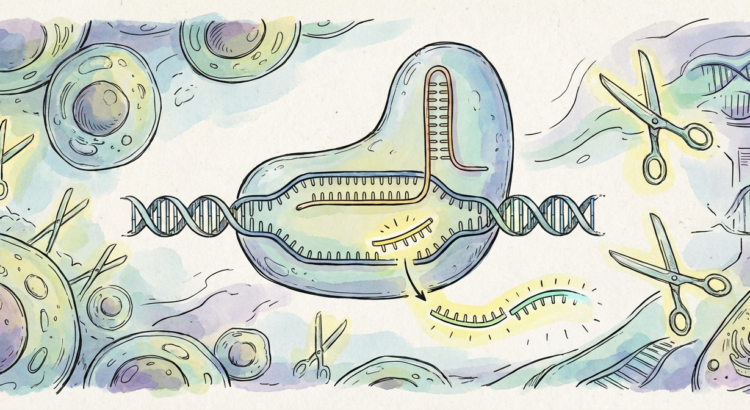
Beyond the Headlines: What Three New CRISPR Studies Actually Tell Us About Gene Editing’s Next Chapter

The Reality Check We Need About CRISPR’s Current Limitations

If you’ve been following the news coverage of CRISPR breakthroughs lately, you might think we’re on the verge of editing our way out of every genetic disease known to humanity. The reality, as three papers published this month in Nature Methods, Cell, and Science reveal, is simultaneously more complex and more fascinating than the headlines suggest. These studies don’t just advance our technical capabilities. They expose fundamental challenges that have been lurking beneath the surface of gene editing’s success stories.

Beyond the Headlines: What Three New CRISPR Studies Actually Tell Us About Gene Editing's Next Chapter
Beyond the Headlines: What Three New CRISPR Studies Actually Tell Us About Gene Editing’s Next Chapter

The first reality check comes from a comprehensive analysis by Zhang and colleagues at MIT, who systematically examined off-target effects across 127 different CRISPR applications in human cells. Their findings should give pause to anyone assuming we’ve solved the precision problem. While Cas9 and newer variants like Cas12a show remarkable accuracy in controlled laboratory conditions, the researchers documented previously undetected genetic alterations occurring at frequencies of 0.1 to 2.3 percent across various cell types. These aren’t random errors. They follow predictable patterns based on chromatin accessibility and sequence homology that we’re only beginning to understand.

What makes this particularly sobering is that many of these off-target events occurred in genes associated with tumor suppression and DNA repair. The implications aren’t immediately catastrophic, but they explain why regulatory agencies have been cautious about approving germline editing applications. We’re not just editing genes in isolation. We’re intervening in complex regulatory networks where even small perturbations can cascade in unexpected ways.

Illustration for Beyond the Headlines: What Three New CRISPR Studies Actually Tell Us About Gene Editing's Next Chapter
Illustration for Beyond the Headlines: What Three New CRISPR Studies Actually Tell Us About Gene Editing’s Next Chapter

Prime Editing’s Promise and the Devil in the Details

The second study, led by David Liu’s team at the Broad Institute, offers a more optimistic but equally complex picture of where gene editing technology is heading. Their latest refinements to prime editing (a technique that can make precise insertions, deletions, and substitutions without requiring double-strand breaks) demonstrate success rates of 75-90 percent for correcting disease-causing mutations in cultured human cells. This represents a dramatic improvement over earlier versions that achieved correction rates of 20-30 percent for the same targets.

The technical breakthrough centers on enhanced guide RNAs that better stabilize the prime editing complex and improved reverse transcriptase enzymes that work more efficiently in mammalian cells. But here’s where the details matter: these improvements are highly context-dependent. Success rates vary dramatically based on the target sequence, surrounding chromatin structure, and cell type. Correcting a single-nucleotide mutation in beta-globin genes (relevant for sickle cell disease) works beautifully in hematopoietic stem cells, while similar edits in neuronal cells showed markedly lower efficiency.

This specificity isn’t a bug, it’s a feature that reveals how much we still need to learn about cellular context in gene editing. The authors spent considerable effort characterizing why certain edits work better in different cellular environments, and their findings suggest that successful therapeutic applications will require customized approaches rather than one-size-fits-all solutions.

Epigenetic Editing Opens New Therapeutic Frontiers

Perhaps the most interesting development comes from the third paper, where Konermann and colleagues demonstrate that modified CRISPR systems can achieve stable epigenetic modifications without altering underlying DNA sequences. Using catalytically inactive Cas9 fused with epigenome-modifying enzymes, they successfully activated silenced genes and suppressed overactive ones in animal models of neurological disorders. The implications extend far beyond traditional gene therapy because epigenetic modifications are potentially reversible and can affect multiple genes simultaneously.

Their most compelling results involve treating mouse models of Huntington’s disease by selectively reducing expression of the mutant huntingtin protein while leaving the normal copy largely unaffected. This approach achieved a 60-70 percent reduction in toxic protein levels across multiple brain regions, with corresponding improvements in motor function and neuronal survival. The epigenetic modifications remained stable for at least six months without apparent side effects.

The elegance of this approach lies in its precision: instead of permanently deleting or replacing DNA sequences, it adjusts gene expression levels by modifying the histone proteins and DNA methylation patterns that regulate genetic activity. This could be transformative for dominant genetic disorders where reducing rather than eliminating gene expression is the therapeutic goal.

Delivery Mechanisms: The Unsexy Challenge That Determines Success

All three studies grapple with a challenge that rarely makes headlines but often determines whether promising laboratory results translate into clinical reality: how do you actually get these molecular tools into the right cells in living patients? The delivery problem is particularly acute for tissues like the brain, heart, and skeletal muscle, where current viral vectors show limited efficacy.

The MIT group’s off-target analysis revealed that delivery method significantly influences editing outcomes. Lipid nanoparticles, currently the gold standard for mRNA delivery, showed different off-target profiles compared to adeno-associated virus vectors or electroporation. This isn’t simply a matter of efficiency. The cellular stress induced by different delivery methods appears to alter the repair pathways that cells use to respond to CRISPR-induced DNA breaks.

Recent advances in tissue-specific viral vectors and novel delivery platforms like engineered extracellular vesicles offer potential solutions, but each approach brings its own limitations. The prime editing study achieved its impressive results partly by optimizing delivery for specific cell types, suggesting that therapeutic applications may require parallel innovation in both editing tools and delivery systems.

What These Findings Mean for the Next Decade of Gene Editing

Taken together, these three studies paint a picture of a field that’s maturing rapidly but still grappling with fundamental challenges. We’re moving beyond the initial proof-of-concept phase toward understanding the subtle factors that determine when and why gene editing succeeds or fails. The next generation of therapeutic applications will likely be more sophisticated but also more narrowly targeted than early projections suggested.

The timeline for widespread clinical implementation remains difficult to predict, but these studies suggest we’re approaching gene editing more like precision medicine than a universal tool. Different disorders will require different strategies, different cell types will need customized approaches, and patient-specific factors will likely influence treatment design. This complexity isn’t a limitation. It’s a reflection of how much we’re learning about working with rather than against cellular biology.

If you’re as fascinated by these developments as I am, I’d love to hear your thoughts on which applications seem most promising or concerning. This field generates new questions faster than we can answer the old ones, and that’s exactly what makes following this science so compelling.