The Million-Qubit Problem: Why Quantum Computing’s Biggest Breakthrough Might Be Its Tiniest Components

When Cold Becomes a Feature, Not a Bug

Inside IBM’s quantum computing lab in Yorktown Heights, a chandelier-sized refrigerator maintains temperatures colder than the void between galaxies. At 15 millikelvin, the quantum processor inside operates 200 times colder than interstellar space. This isn’t engineering overkill. It’s the price of quantum coherence at scale, and it shows us the central challenge facing quantum computing hardware: the components that make quantum computers work are also what prevent them from scaling up.

The dilution refrigerator housing IBM’s 1,121-qubit Condor processor weighs roughly 3,000 kilograms and consumes 25 killiwatts of power continuously. Here’s what that means: maintaining quantum states in current superconducting systems requires cooling power equivalent to removing the thermal energy of a single photon of room-temperature light every few seconds from each qubit. Scale this to the million qubits needed for cryptographically relevant quantum computing, and the refrigeration requirements alone would demand a small power plant.

The Coherence-Scale Paradox

Quantum coherence times measure how long a qubit maintains its delicate quantum superposition before environmental noise destroys the computation. Google’s Sycamore processor achieves coherence times around 100 microseconds for its superconducting transmon qubits. This sounds impossibly brief, but consider the scale: in those 100 microseconds, the quantum state oscillates roughly 5 billion times. The precision required is like a grandfather clock keeping time accurately for 30,000 years while being continuously shaken by a magnitude 4 earthquake.

Recent advances in error correction have demonstrated that logical error rates can decrease exponentially with the number of physical qubits used for error correction, but only if those physical qubits exceed a critical error threshold. IBM’s latest results with their heavy-hexagon lattice architecture show logical error rates dropping by a factor of two when scaling from distance-3 to distance-5 surface codes, using 17 and 49 physical qubits respectively. This is genuine progress, yet achieving fault-tolerant quantum computing will likely require surface code patches using 1,000 to 10,000 physical qubits to encode a single logical qubit.

Atomic Precision in Semiconductor Quantum Dots

Silicon quantum dots offer a radically different approach to the scaling problem. They take advantage of the semiconductor industry’s decades of miniaturization expertise. Intel’s Horse Ridge cryogenic control electronics operate at 4 kelvin instead of room temperature, reducing the thermal noise that couples into qubit control lines by a factor of 75. More significantly, their silicon spin qubits can be manufactured using modified versions of existing semiconductor fabrication processes, potentially enabling the same economies of scale that drove Moore’s Law.

The physics here operates at almost incomprehensible scales. A typical silicon quantum dot confines a single electron in a region roughly 20 nanometers across. The electron’s spin state, which encodes the qubit information, can be manipulated by magnetic fields that vary by less than one part in 10 million across the chip surface. SiQure’s recent demonstrations of spin qubit fidelities exceeding 99.5% suggest that silicon-based approaches might circumvent some of the fundamental noise limitations plaguing superconducting systems. Significant engineering challenges remain in scaling up control electronics, though.

Trapped Ion Highways and Photonic Networks

IonQ’s trapped ion systems take the opposite approach: instead of cramming qubits into ever-smaller spaces, they’re building quantum processors that can scale horizontally. Their latest architecture uses chains of ytterbium ions trapped by electric fields in a ultra-high vacuum chamber, where each ion acts as a qubit with coherence times exceeding 10 seconds. The scale advantage becomes apparent when considering connectivity: while superconducting qubits can typically interact only with their nearest neighbors, trapped ions can perform two-qubit gates between any pair in the chain.

The engineering required borders on science fiction. Individual ions must be positioned with nanometer precision while being shuttled between different zones of the trap at speeds up to 1 meter per second. Laser pulses lasting femtoseconds manipulate internal energy states with frequency precision better than one part in 10 trillion. Quantinuum’s latest H-Series systems demonstrate how this approach might scale: their modular architecture allows multiple ion trap modules to be connected via photonic links, potentially enabling quantum processors with thousands of qubits while maintaining the high-fidelity operations that make trapped ions attractive.

The Materials Science Revolution

Perhaps the most promising hardware breakthroughs are happening at the materials level, where researchers are engineering quantum properties from the ground up. Topological qubits, still largely theoretical, would encode quantum information in exotic quantum states of matter that are inherently protected from environmental noise. Microsoft’s Azure Quantum hardware efforts focus on Majorana fermions, particles that are their own antiparticles and could theoretically maintain quantum coherence even at relatively high temperatures.

Google’s recent work with error-corrected logical qubits demonstrates another materials approach: optimizing the specific isotopes used in superconducting qubits. By using silicon-28 substrates with all nuclear spins removed, they’ve reduced magnetic noise sources by orders of magnitude. The scale of this optimization is remarkable. In their latest chips, fewer than one atom in 100 million contains a nuclear spin, achieved through isotopic purification processes that make semiconductor-grade silicon look crude by comparison.

These hardware advances suggest that quantum computing’s scaling challenges aren’t fundamental physical limits, but engineering problems with engineering solutions. The question isn’t whether we’ll build million-qubit quantum computers, but which of these radically different approaches will prove most practical at scale. Think about this: every quantum computing architecture currently under development operates on physical principles that would have seemed impossible to control just 30 years ago. What seems impossibly complex today might be tomorrow’s manufacturing standard.

The Fusion Scale Problem: Why Building a Star in Your Backyard is Harder Than It Sounds

The Deceptive Simplicity of Nuclear Fusion

When I tell people I follow fusion energy development with the obsessive dedication usually reserved for sports statistics, they often respond with some variation of “Isn’t that just smashing atoms together?” The question reveals our wonderfully human tendency to reduce complex phenomena to their essential components, but it also highlights one of the most fascinating aspects of fusion research: the gap between conceptual simplicity and practical implementation is so vast it might as well be measured in light-years.

The Fusion Scale Problem: Why Building a Star in Your Backyard is Harder Than It Sounds

The basic physics of fusion really is straightforward. Take two hydrogen nuclei, overcome their mutual electromagnetic repulsion, and let the strong nuclear force take over to bind them into helium while releasing tremendous energy. Stars have been doing this for billions of years with apparent ease. The challenge lies entirely in the scale problem, and by scale, I mean the nearly incomprehensible engineering requirements needed to replicate stellar conditions on Earth.

Consider this: the core of our Sun operates at roughly 15 million degrees Celsius and pressures 200 billion times greater than Earth’s atmosphere. These conditions allow fusion to occur even though the collision rate between hydrogen nuclei is relatively modest. But here’s where the scale problem gets beautifully, maddeningly complex. We can’t recreate stellar pressures in terrestrial reactors, so we have to compensate by dramatically increasing temperature, typically to 100 million degrees or more. This single constraint creates a cascade of engineering challenges that make landing on Mars look like assembling IKEA furniture.

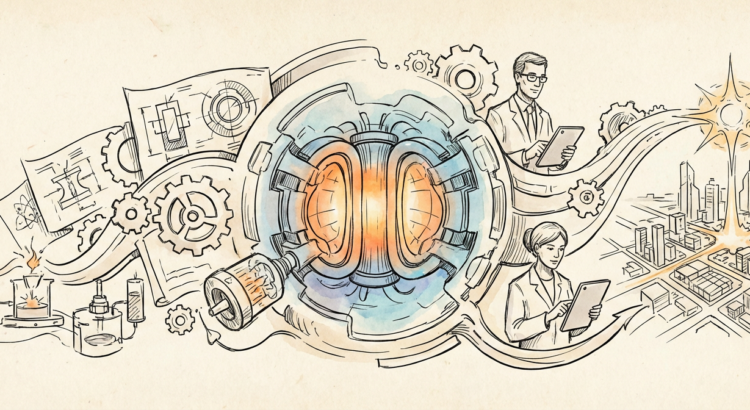
Illustration for The Fusion Scale Problem: Why Building a Star in Your Backyard is Harder Than It Sounds

Magnetic Confinement: Building Invisible Bottles for the Sun

The most advanced approach to solving the fusion scale problem uses magnetic confinement, and the flagship project is ITER, currently under construction in southern France. When I first saw the construction photos, my immediate reaction was disbelief at the sheer size. The tokamak chamber alone will be 11 meters tall and 19 meters wide. To put this in perspective, you could park a school bus inside the plasma chamber with room to spare.

But the true scale problem hits you when you consider what those magnetic coils have to accomplish. They need to create and maintain magnetic fields tens of thousands of times stronger than Earth’s magnetic field, shaped with precision measured in millimeters, to contain a plasma that would instantly vaporize any material container. Each of ITER’s 18 toroidal field coils weighs 310 tons and has to be cooled to negative 269 degrees Celsius using liquid helium. The engineering tolerance for these superconducting magnets is so demanding that the entire structure has to account for thermal expansion and contraction while maintaining magnetic field precision that would make a Swiss watchmaker weep with envy.

The scale requirements extend beyond just the reactor core. ITER’s electrical power systems will draw 620 megawatts during operation, enough to power a medium-sized city. The cryogenic cooling system requires infrastructure that resembles a small industrial complex. This is the fundamental scale problem of magnetic confinement fusion: to create conditions more extreme than the center of stars, you need an apparatus whose supporting systems dwarf most industrial facilities.

Inertial Confinement: The Precision of Divine Clockwork

If magnetic confinement represents the “build it big” approach to fusion, inertial confinement fusion is all about precision at scales that challenge human comprehension. The National Ignition Facility achieved fusion ignition in December 2022, and the details of that accomplishment read like science fiction translated into engineering specifications.

The target for NIF’s fusion reaction is a gold cylinder called a hohlraum, about the size of a pencil eraser, containing a sphere of frozen hydrogen fuel smaller than a peppercorn. When 192 laser beams converge on this target, they deliver 2.05 megajoules of energy in a pulse lasting just a few nanoseconds. To appreciate this timescale, consider that light travels only about one foot in a nanosecond. The fusion reaction itself occurs in a sphere compressed to densities 100 times greater than lead, at temperatures exceeding 100 million degrees, lasting for about 100 trillionths of a second.

The scale problem here operates in reverse: instead of building massive containment systems, inertial confinement requires controlling energy delivery with precision that borders on the supernatural. The 192 laser beams have to arrive at the target simultaneously within a timing window measured in picoseconds. Any deviation in energy, timing, or beam uniformity can prevent ignition. It’s like 192 people throwing tennis balls from different positions around a stadium and having them all strike a grape at exactly the same instant with identical force.

Alternative Approaches and the Innovation Race

The scale challenges of ITER and NIF have sparked a renaissance of alternative fusion approaches, each attempting to solve the scale problem through different physics or engineering strategies. Companies like Commonwealth Fusion Systems are betting on high-temperature superconductors to create smaller, more powerful magnetic confinement systems. Their proposed ARC reactor would generate similar fusion conditions to ITER but in a device roughly one-tenth the volume, achieved by using magnetic fields twice as strong as ITER’s capabilities.

Other approaches try to sidestep traditional scale requirements entirely. Helion Energy’s approach uses a linear accelerator configuration that collides plasma rings at tremendous velocities, aiming to achieve fusion through dynamic compression rather than steady-state confinement. TAE Technologies has an unusual field-reversed configuration that could potentially use alternative fusion fuels like hydrogen-boron, which would eliminate neutron radiation but requires even more extreme temperatures.

Each alternative represents a different bet on how to solve the fundamental scale problem. Some aim for higher magnetic fields, others for better plasma confinement geometry, and still others for entirely different physics approaches. The diversity of current research reflects both the magnitude of the challenge and the ingenuity of engineers willing to attack it from multiple angles simultaneously.

Timeline Realities and the Path Forward

When people ask me about fusion timelines, I often reference the famous joke that fusion is always 20 years away and always will be. But recent developments suggest we’re entering a genuinely different phase of fusion development, where the scale problem is being attacked by multiple well-funded projects with distinct technical approaches and realistic timelines extending into the 2030s.

ITER will begin operations in the early 2030s, and if successful, will demonstrate sustained fusion reactions producing more energy than consumed by the plasma heating systems. Several private companies have announced plans for demonstration reactors in the same timeframe. Commonwealth Fusion Systems aims for their SPARC demonstration reactor by 2025, followed by commercial deployment in the 2030s. These overlapping timelines create multiple opportunities for breakthrough developments.

The scale problem that has dominated fusion research for decades may finally be yielding to advances in materials science, computational modeling, and precision manufacturing. High-temperature superconductors enable stronger magnetic fields in smaller packages. Advanced computer simulations allow engineers to optimize plasma behavior before building expensive hardware. Precision manufacturing techniques developed for semiconductor and aerospace industries provide the tolerances needed for fusion-grade components.

What gets me most excited about current fusion development is the convergence of multiple technological capabilities that individually seemed impossible just a decade ago. We’re watching the maturation of technologies that make previously theoretical solutions to the scale problem increasingly practical. The next few years will determine whether humanity can finally harness stellar fire, and honestly, I can barely contain my excitement to see which approach succeeds first. If you share my fascination with these engineering marvels pushing the boundaries of what’s possible, I’d love to hear your thoughts on which fusion approach seems most promising and why.

Programming Life’s Operating System: New Synthetic Biology Breakthroughs Are Rewriting Cellular Software

Beyond Cut and Paste: The Precision Programming Revolution

The latest issue of Nature Biotechnology just published what might be the biggest leap in synthetic biology since CRISPR first taught us to edit genes with molecular scissors. A team led by researchers at MIT and the Broad Institute developed what they’re calling “cellular operating systems” – engineered genetic circuits that can reprogram how cells process information, make decisions, and execute complex biological programs. This isn’t your typical gene therapy approach where we swap out one broken component. We’re talking about installing entirely new software into living cells.

Programming Life's Operating System: New Synthetic Biology Breakthroughs Are Rewriting Cellular Software
Programming Life’s Operating System: New Synthetic Biology Breakthroughs Are Rewriting Cellular Software

The technical work here centers on something called orthogonal transcriptional circuits. Think of transcription as the cellular process of reading genetic instructions and converting them into action. What the research teams accomplished is creating parallel transcriptional pathways that operate independently of a cell’s native genetic machinery. These synthetic circuits use engineered proteins that don’t interfere with normal cellular operations but can execute complex logical operations. They’re basically turning cells into biological computers that can run custom programs while keeping their day jobs as living organisms.

The precision is honestly remarkable. Using a combination of synthetic promoters, novel transcription factors, and carefully designed genetic switches, they’ve demonstrated cells that can perform multi-step logical operations with the kind of reliability we expect from electronic circuits. We’re not talking about simple on-off switches here. These are cells programmed to evaluate multiple environmental inputs, process that information through designed logical pathways, and produce specific outputs based on predetermined decision trees.

Manufacturing Miracles: When Cells Become Factories

Perhaps the most immediately practical application emerging from this work involves transforming ordinary bacterial cells into highly specialized manufacturing platforms. The research published in Cell Systems last month shows engineered E. coli that can produce complex pharmaceutical compounds through multi-step synthetic pathways. Traditional chemical manufacturing would find these processes impossibly expensive to replicate.

The breakthrough lies in the modular design of these biological factories. Rather than engineering each pathway from scratch, researchers developed standardized genetic components that can be mixed and matched like software modules. Need to produce a complex antibiotic? Combine the appropriate enzymatic modules with regulatory circuits that optimize production timing and resource allocation. Working on a novel cancer therapeutic? The same foundational platform can be reprogrammed with different molecular assembly instructions.

What gets me excited about this is the efficiency gains we’re seeing. Traditional pharmaceutical manufacturing often involves harsh chemical processes, toxic solvents, and energy-intensive purification steps. These engineered cellular factories operate at room temperature, use renewable feedstocks, and can be programmed to self-regulate their production processes. Early results suggest manufacturing costs could drop by orders of magnitude for certain complex molecules.

The scalability question remains open, but preliminary pilot studies look encouraging. Fermentation-based production using these engineered systems has already demonstrated commercial viability for several high-value compounds, and researchers are rapidly expanding the catalog of molecules that can be produced through biological rather than chemical synthesis.

Therapeutic Programming: Medicine Meets Software Engineering

The most ambitious applications involve programming therapeutic cells that can make real-time medical decisions inside the human body. Published work from researchers at UCSF and Stanford describes engineered T cells that function as “living therapeutics”. These are immune cells programmed with synthetic genetic circuits that can detect disease markers, evaluate the local cellular environment, and make sophisticated decisions about when and how to deploy their therapeutic payloads.

These aren’t simple CAR-T cells that target one specific cancer marker. We’re looking at immune cells programmed with complex decision trees that can distinguish between healthy tissue and multiple types of diseased cells, evaluate the severity of local inflammation, and modulate their response accordingly. The synthetic circuits include safety mechanisms that can halt therapeutic activity if certain danger signals are detected. They’re building biological kill switches into the therapy itself.

The precision feels unprecedented. Engineered cells can now be programmed to respond only when multiple disease markers are present simultaneously, dramatically reducing the risk of attacking healthy tissue. They can also be designed to escalate their therapeutic response gradually, starting with mild interventions and increasing potency only if initial treatments prove insufficient.

Clinical translation remains years away, but the foundational science is solid. Early studies in mouse models demonstrate that these programmable therapeutic cells can achieve treatment outcomes that would be impossible with conventional drugs, while maintaining safety profiles that traditional cellular therapies struggle to match.

Environmental Applications: Biological Solutions to Chemical Problems

Synthetic biology’s environmental applications are moving beyond proof-of-concept demonstrations into real-world deployment scenarios. Recent publications in Environmental Science & Technology describe engineered microorganisms designed to tackle specific pollution challenges with unprecedented precision and efficiency.

The most promising developments involve microbes programmed to detect and degrade specific environmental contaminants. Unlike broad-spectrum approaches that can disrupt entire ecosystems, these engineered organisms can be designed with highly specific targeting capabilities. They activate their remediation functions only in the presence of target pollutants and can be programmed with built-in containment mechanisms that prevent their spread beyond designated treatment areas.

Plastic degradation is a particularly compelling application. Researchers have engineered bacterial communities that can break down specific types of plastic waste into harmless byproducts, but with synthetic regulatory circuits that ensure the degradation process occurs only under controlled conditions. The engineered microbes can distinguish between target plastic waste and naturally occurring polymers, preventing unintended environmental damage.

Carbon capture applications show similar promise. Engineered algae and cyanobacteria can be programmed with enhanced CO2 fixation pathways while simultaneously producing valuable byproducts like biofuels or specialty chemicals. The synthetic regulatory systems allow these organisms to optimize their metabolism for maximum carbon sequestration under varying environmental conditions.

The Precision Challenge: Navigating Complexity and Uncertainty

For all the excitement surrounding these advances, significant technical and safety challenges remain unresolved. The complexity of biological systems means that even carefully designed synthetic circuits can produce unexpected behaviors when deployed in real-world conditions. Lab-based demonstrations, however elegant, don’t always translate directly to the messy reality of living organisms operating in complex environments.

Containment represents perhaps the most pressing challenge. While researchers have developed multiple approaches to biological containment, including engineered dependencies on artificial nutrients and genetic kill switches, the long-term reliability of these systems under evolutionary pressure remains an open question. Biological systems evolve. Engineered organisms could potentially develop resistance to their programmed limitations over extended periods.

Regulatory frameworks are struggling to keep pace with technological development. Current oversight mechanisms were designed for conventional genetic modification approaches and may not adequately address the unique risks and opportunities presented by programmable biological systems. The complexity of synthetic biological circuits makes traditional safety assessment approaches increasingly inadequate.

These challenges aren’t insurmountable, but they demand serious attention as the field transitions from laboratory demonstration to real-world application. The scientific community is actively developing improved containment strategies, more robust predictive models, and comprehensive safety assessment protocols.

What keeps me awake at night isn’t fear of these technologies but excitement about their potential combined with recognition of the careful work required to realize that potential safely. The intersection of biology and engineering is producing tools that could fundamentally transform how we approach medicine, manufacturing, and environmental stewardship. The key papers I’ve referenced here represent just the beginning of what promises to be a remarkable transformation in our ability to program living systems with the precision we once reserved for electronic devices. I’d love to hear your thoughts on which applications you find most compelling or concerning.

The Fusion Revolution is Finally Here (and This Time I Actually Mean It)

Why This Decade Might Actually Be Different

I’ve been following fusion energy development for over fifteen years, and I’ll be honest—I’ve gotten my hopes up before. I’ve watched countless “breakthrough” announcements that led to incremental progress at best, and I’ve learned to temper my excitement with healthy skepticism. But something fundamentally different is happening right now, and the convergence of recent developments has me staying up way too late reading preprints and feeling genuinely optimistic about humanity’s energy future.

The Fusion Revolution is Finally Here (and This Time I Actually Mean It)

Things have changed dramatically in just the past three years. We’re seeing unprecedented private investment, major advances in materials science, and perhaps most importantly, actual net energy gain demonstrations that weren’t just theoretical exercises. When the National Ignition Facility achieved ignition in December 2022, producing more energy from fusion reactions than was directly deposited into the fuel, it wasn’t just a scientific milestone. It was proof of concept that fusion energy release could exceed energy input, even if the overall system efficiency remained frustratingly low.

But here’s what’s keeping me up at night reading papers: the NIF breakthrough was achieved using inertial confinement fusion, which involves blasting tiny pellets with lasers. Meanwhile, magnetic confinement approaches using tokamaks and stellarators are hitting new performance milestones at the same time. We’re not betting on a single horse anymore. Multiple fusion pathways are showing real promise simultaneously.

The Materials Science Revolution Enabling Fusion

The most underappreciated driver of fusion progress isn’t plasma physics, it’s materials science. High-temperature superconducting magnets using rare earth barium copper oxide tapes are finally becoming commercially viable, enabling much stronger magnetic fields than previous copper or niobium-based systems. Companies like Commonwealth Fusion Systems are building tokamaks with magnetic fields exceeding 20 Tesla, compared to the 5-6 Tesla typical in earlier designs.

This matters enormously because magnetic field strength scales fusion power density by the fourth power. Double the magnetic field, and you get sixteen times more fusion reactions in the same volume. These new superconducting magnets also operate at much higher temperatures than older designs, around 20 Kelvin instead of 4 Kelvin, dramatically reducing the complexity and cost of cooling systems.

Beyond magnets, we’re seeing breakthroughs in plasma-facing materials that can withstand the neutron bombardment and heat fluxes inside fusion reactors. Tungsten-based materials and advanced ceramic composites are showing remarkable durability in test environments. The ITER project’s first wall and divertor designs use materials that simply didn’t exist twenty years ago, engineered specifically to handle the extreme conditions inside a burning plasma.

Private Investment Meets Scientific Progress

The influx of private capital into fusion development represents more than just investor enthusiasm. It reflects a fundamental shift in how fusion research operates. While government-funded projects like ITER follow necessarily cautious, consensus-driven approaches, private companies can take calculated risks and iterate rapidly on reactor designs.

Commonwealth Fusion Systems has raised over $1.8 billion to build their SPARC demonstration reactor, while Helion Energy secured $500 million and claims they’ll deliver commercial fusion power by 2028. TAE Technologies is pursuing an alternative approach using field-reversed configurations instead of traditional tokamaks. Each company represents a different bet on fusion reactor design, from conventional tokamaks to innovative stellarator configurations to entirely novel magnetic confinement schemes.

What’s particularly encouraging is the level of technical sophistication these companies demonstrate. Their published research shows deep understanding of plasma physics challenges, realistic timelines for engineering development, and concrete plans for addressing the materials and manufacturing challenges that have historically plagued fusion development. These aren’t just well-funded startups making bold claims. They’re serious engineering efforts led by researchers who’ve spent decades working on fusion physics.

The competition between approaches is accelerating progress across the entire field. When multiple teams pursue different solutions to the same fundamental challenges, successful innovations get rapidly adopted and unsuccessful approaches get abandoned quickly rather than lingering for decades in research programs that lack competitive pressure.

The Engineering Challenges We’re Actually Solving

Achieving fusion reactions in a laboratory has been possible for decades. The challenge has always been engineering systems that produce more energy than they consume while operating reliably for extended periods. Recent progress addresses these engineering realities rather than just pushing plasma physics boundaries.

Tritium breeding represents one challenge that’s finally receiving serious attention. Fusion reactions between deuterium and tritium produce helium, neutrons, and energy, but tritium doesn’t occur naturally in useful quantities. Practical fusion reactors must breed their own tritium by capturing neutrons in lithium-containing blankets surrounding the reactor core. Recent experiments at facilities like the Joint European Torus have demonstrated tritium breeding ratios approaching the 1.1 minimum required for self-sufficiency.

Heat removal and power conversion systems are advancing rapidly as well. Fusion reactors will generate enormous heat fluxes, much higher than current nuclear fission plants, requiring innovative cooling and power generation systems. Helium-cooled blanket designs and advanced steam cycles are being tested that could achieve thermal efficiencies exceeding 40%, comparable to the best fossil fuel power plants.

Perhaps most importantly, we’re seeing serious attention to manufacturing and maintenance challenges. Fusion reactors will require periodic replacement of plasma-facing components and regular maintenance of complex magnetic systems. Recent reactor designs have remote handling systems and modular component designs that enable realistic maintenance schedules. These aren’t glamorous breakthroughs, but they’re essential for commercial viability.

The Stakes Couldn’t Be Higher

Climate change gives fusion development an urgency that didn’t exist during previous waves of research. Global energy demand is projected to increase by 50% by 2050, while simultaneous deep decarbonization requires replacing virtually all fossil fuel generation capacity. Solar and wind power are scaling rapidly, but they require massive energy storage systems to provide baseload power. Fusion offers the possibility of carbon-free baseload generation at scales that could meet growing global energy demand.

The geopolitical implications are equally significant. Countries that achieve commercial fusion first will gain enormous strategic advantages in manufacturing, energy security, and economic competitiveness. China is investing heavily in fusion research and has set aggressive timelines for demonstration reactors. The European Union’s ITER project is the largest international scientific collaboration in history. The United States is simultaneously funding government research while encouraging private sector development through programs like ARPA-E.

But here’s what keeps me up at night reading fusion papers: we might actually be close to succeeding. The technical challenges that seemed insurmountable fifteen years ago are being systematically solved by teams with adequate funding, advanced materials, and sophisticated engineering approaches. Multiple independent efforts are converging on similar timelines for demonstration reactors in the early 2030s and commercial deployment by the 2040s.

If you’re as fascinated by fusion development as I am, I’d love to hear your thoughts on which approaches seem most promising or what aspects of fusion engineering you find most interesting. The next decade will determine whether fusion finally transitions from decades of research into practical energy generation, and frankly, I can’t wait to see what happens next.

The Scale Problem: Why Synthetic Biology’s Biggest Breakthroughs Are Hiding in Plain Sight

When Molecules Become Machines

Picture this: you’re standing in a factory the size of a bacterium, watching molecular assembly lines churn out everything from life-saving medicines to biodegradable plastics. The workers are proteins no bigger than a few nanometers, the conveyor belts are strands of DNA, and the quality control system operates with a precision that would make any manufacturing engineer weep with envy. This isn’t science fiction anymore. It’s synthetic biology, and it’s happening right now in laboratories around the world.

But here’s the thing that keeps me awake at night, scrolling through the latest papers from Nature Biotechnology: we’re dealing with a scale problem that’s both the field’s greatest challenge and its most extraordinary opportunity. When we engineer biological systems, we’re working across scales that span nearly ten orders of magnitude. We’re talking about individual atoms arranging themselves into functional proteins, all the way up to entire ecosystems being reshaped by our engineered organisms.

Consider the recent work coming out of MIT’s Synthetic Biology Center, where researchers have successfully programmed bacteria to manufacture complex pharmaceuticals. At the molecular level, they’re essentially teaching single-celled organisms to run chemical factories that require dozens of coordinated enzymatic reactions. Each enzyme is a machine roughly two to ten nanometers in size, yet together they’re producing gram quantities of compounds that previously required extensive chemical synthesis. It’s watching a city of molecular workers, each no bigger than a virus, collaborate to build something you can actually hold in your hand.

The Cellular Construction Challenge

The leap from molecules to living cells is perhaps the most mind-bending scaling challenge in all of science. A typical bacterial cell is about one micrometer across, which means it’s roughly 1,000 times larger than the proteins working inside it. To put this in perspective, if a protein were the size of a person, the cell would be the size of a small city, bustling with millions of molecular workers carrying out thousands of different jobs simultaneously.

What makes synthetic biology so remarkable is that we’re learning to redesign these cellular cities from the ground up. Take the recent breakthroughs in biosensors, where engineered bacteria can detect environmental pollutants at concentrations as low as parts per billion. These living sensors work by coupling detection molecules that can bind to specific toxins with genetic circuits that produce measurable outputs, often in the form of fluorescent proteins that literally make the cells glow when they encounter their target compounds.

But scaling up from proof-of-concept in a petri dish to real-world applications presents challenges that are only just beginning to be understood. When you have millions of engineered cells working together, small variations in gene expression can cascade into massive differences in overall performance. Preliminary results from several research groups suggest that what works beautifully in a controlled laboratory environment can behave very differently when deployed in the messy, complex conditions of the real world.

The most promising recent developments involve what researchers call “modular biological systems,” where complex functions are broken down into standardized, interchangeable parts. Think of it as biological Lego blocks, where each piece has a well-defined function and can be combined with others to create increasingly sophisticated systems. The MIT Registry of Standard Biological Parts now contains thousands of these biological components, each carefully characterized and documented for use by researchers worldwide.

From Lab Bench to Industrial Scale

Here’s where things get really interesting, and where the scale problem becomes almost incomprehensibly vast. Moving from laboratory-scale synthetic biology to industrial production means scaling up not just by factors of thousands, but by factors of millions or even billions. A laboratory bioreactor might hold a few liters of engineered microorganisms, while an industrial facility might process millions of liters continuously.

The recent success stories are genuinely remarkable. Companies like Ginkgo Bioworks and Modern Meadow now operate what they call “biological foundries,” automated facilities that can design, build, and test thousands of engineered organisms simultaneously. These facilities are a new kind of manufacturing, where the production lines themselves are alive and evolving. The scale of automation required is staggering: robotic systems that can manipulate individual cells, DNA synthesizers that can write genetic code to order, and analytical instruments sensitive enough to detect the molecular signatures of success or failure in real-time.

But the most fascinating aspect of industrial-scale synthetic biology isn’t just the size of the operations, it’s the emergence of entirely new categories of materials and products. Bolt Threads has developed synthetic spider silk produced by engineered yeast, creating fibers stronger than steel that can be woven into textiles. The scaling challenge here involves not just growing massive quantities of yeast, but developing entirely new processing methods to extract and purify proteins that evolution never intended to be produced at industrial scales.

Ecosystem-Scale Implications

The ultimate frontier of the scale problem in synthetic biology extends beyond individual organisms or even industrial facilities to entire ecosystems. This is where my excitement about the field becomes tinged with a healthy dose of scientific caution, because we’re venturing into territory where our models and predictions become increasingly uncertain.

Recent research on engineered probiotics shows both the promise and the complexity of ecosystem-scale interventions. Scientists have developed genetically modified bacteria that can live in the human gut and produce therapeutic compounds directly where they’re needed. Early clinical trials have shown remarkable promise for treating inflammatory bowel disease and metabolic disorders. But the human microbiome contains trillions of microorganisms with thousands of species, all interacting in ways we’re only beginning to understand.

The environmental applications are even more ambitious and, frankly, more uncertain. Researchers are developing engineered algae that could potentially remove carbon dioxide from the atmosphere at massive scales, and modified bacteria that could break down plastic pollution in the oceans. These approaches could theoretically address some of our most pressing global challenges, but the ecological implications of releasing engineered organisms into natural environments are extraordinarily complex to predict.

What keeps me most excited about these ecosystem-scale applications is that they are a fundamentally new approach to solving global problems. Instead of building massive industrial infrastructure, we’re programming biology itself to do the work. But the responsible development of these technologies requires unprecedented levels of collaboration between synthetic biologists, ecologists, ethicists, and policymakers.

The Beautiful Complexity Ahead

The scale problem in synthetic biology isn’t just a technical challenge to be solved. It’s a window into the beautiful, incomprehensible complexity of life itself. Every time we successfully engineer biological systems at one scale, we discover new phenomena and possibilities at the next scale up. The field is advancing so rapidly that papers published just two years ago already feel like ancient history, and the most exciting breakthroughs are often the ones that reveal just how much we still don’t know.

What makes this moment in scientific history so remarkable is that we’re not just observers of biological complexity anymore. We’re becoming architects of it, designing living systems that could reshape everything from medicine to manufacturing to environmental restoration. The scale problem is teaching us that biology isn’t just a collection of individual organisms, but a series of interconnected systems that operate across every conceivable scale of space and time.

The next few years will bring discoveries that will fundamentally change how we think about the relationship between technology and biology. If you’re as fascinated by these questions as I am, I’d love to hear your thoughts on which applications of synthetic biology you think will have the biggest impact, or which aspects of the scale problem you find most intriguing.

Why Asteroid Mining Feasibility Studies Keep Me Awake at Night (And Should Excite You Too)

The Numbers That Made Me Spill Coffee on My Keyboard

Last Tuesday at 2:47 AM, I was deep in a NASA technical report when I encountered a figure that made me immediately screenshot it and send it to every space-enthusiast friend I have: a single metallic asteroid roughly 1.6 kilometers in diameter contains more platinum than has ever been mined on Earth. Not “a lot of platinum.” More platinum than our entire civilization has extracted from the ground in all of human history.

But here’s where second-order thinking kicks in, and where the real excitement begins. The immediate reaction is obvious: we could become unfathomably wealthy by mining space rocks. The more interesting question is what happens when platinum becomes as common as aluminum. When rare earth elements are no longer rare. When the fundamental scarcity assumptions underlying our entire technological and economic system suddenly evaporate.

The latest feasibility studies from companies like Planetary Resources and Deep Space Industries aren’t just engineering documents. They’re blueprints for economic disruption on a scale that makes the internet revolution look quaint. Recent analyses suggest that the first successful asteroid mining operation could crash global commodity markets while simultaneously making technologies we currently consider exotic or experimental suddenly viable at planetary scale.

The Engineering Reality Check (It’s Harder Than You Think, But Not Impossible)

The current feasibility studies paint a picture that’s simultaneously more challenging and more achievable than popular media suggests. NASA’s recent Asteroid Redirect Mission studies indicate that capturing and mining a small near-Earth asteroid would require approximately 15-20 years of development and cost between $2.6-4.1 billion. That’s expensive, but it’s also within the budget range of major space agencies or large corporations.

The technical hurdles are formidable but not insurmountable. Prospecting missions need to identify asteroids with favorable composition, orbital mechanics, and structural integrity. The OSIRIS-REx mission’s recent success at Bennu showed that we can successfully navigate to, study, and collect samples from asteroids. What’s missing is the scale-up to industrial extraction and the development of space-based processing facilities.

Recent advances in autonomous robotics and 3D printing are changing the feasibility math dramatically. Studies from the Colorado School of Mines suggest that self-replicating mining robots could be deployed within 30 years, dramatically reducing the cost per ton of extracted material. The key insight from these studies is that asteroid mining doesn’t need to be profitable from day one. It needs to show a credible path to profitability that justifies the initial investment.

But the most compelling finding from recent feasibility studies isn’t about the mining itself. It’s about the infrastructure requirements. Successfully mining asteroids requires developing capabilities for long-duration space operations, advanced robotics, space-based manufacturing, and orbital mechanics at a scale we’ve never attempted. These capabilities, once developed, would transform our entire relationship with space.

The Second-Order Economic Disruptions Nobody’s Talking About

The direct economic impact of asteroid mining gets all the attention, but the indirect effects could be far more transformative. Consider what happens when platinum group metals become abundant enough to make fuel cells economically competitive with internal combustion engines across all vehicle categories. Not just luxury cars or urban fleets, but every truck, ship, and aircraft on the planet.

Goldman Sachs recently published an analysis suggesting that asteroid-derived materials could enable the construction of space-based solar power systems capable of generating electricity at costs below terrestrial fossil fuels. The implications cascade: abundant clean energy transforms manufacturing, agriculture, water desalination, and carbon capture. Industries we haven’t even imagined become economically viable.

But here’s the paradox that keeps me fascinated: the countries and companies that successfully develop asteroid mining capabilities might not profit primarily from selling raw materials. They’ll profit from being the first to build industries that depend on abundant space-derived resources. The real value isn’t in the platinum. It’s in being the first to build the platinum-abundant economy.

Recent economic modeling suggests that asteroid mining could trigger a complete restructuring of global supply chains. Why maintain environmentally destructive rare earth mining operations in politically unstable regions when the same materials are available from asteroids? The geopolitical implications are staggering. Nations that currently derive power from resource extraction could find their influence dramatically reduced, while spacefaring nations gain unprecedented advantages.

The Timeline Reality: Near-Term Developments vs. Science Fiction

Current feasibility studies consistently point to a 20-30 year timeline for the first commercially viable asteroid mining operations. That might sound like science fiction, but it’s worth remembering that the iPhone was introduced just 16 years ago. The technologies required for asteroid mining are advancing on similar exponential curves.

The near-term developments we should expect to see within the next decade include robotic prospecting missions, proof of space-based resource extraction at small scales, and the development of space-based manufacturing capabilities. Several companies are already testing asteroid simulant processing equipment in Earth orbit. These aren’t speculative ventures. They’re engineering tests with specific technical milestones and measurable progress.

However, the studies also consistently highlight the difference between technical feasibility and economic viability. The first asteroid mining operations will likely target high-value, low-volume materials: rare earth elements, platinum group metals, and specialized alloys. The vision of asteroid-based bulk materials transforming Earth’s economy remains decades away.

What excites me most about the current feasibility studies is how they’re forcing us to think systematically about space resource use. The teams working on these projects aren’t just engineers. They’re economists, policy experts, environmental scientists, and ethicists. They’re trying to figure out not just whether we can mine asteroids, but whether we should, and how to do it responsibly.

Why This Matters More Than You Might Think

The real significance of asteroid mining feasibility studies goes far beyond mining itself. These studies are forcing us to develop the technological and institutional frameworks for a space-based economy. The robots, communication systems, autonomous manufacturing capabilities, and space transportation infrastructure required for asteroid mining are the same technologies needed for Mars colonization, space-based solar power, and eventually interstellar exploration.

Recent studies suggest that developing asteroid mining capabilities could accelerate the timeline for permanent space settlements by decades. When space-based industries can access raw materials without launching them from Earth’s gravity well, the economics of space habitation change fundamentally. We’re not just talking about mining rocks. We’re talking about the infrastructure that could make humanity a multi-planetary species.

The next few years will be critical. We’ll see the results of prospecting missions, tests of space-based processing technologies, and the first serious attempts at commercial asteroid resource extraction. The data from these missions will either validate the optimistic feasibility projections or force us to recalibrate our expectations.

I’ll be staying up late reading every technical report, mission update, and economic analysis I can find. Because somewhere in those documents are the early indicators of what might be the most transformative technological development of our lifetimes. If you’re as fascinated by this as I am, I’d love to hear your thoughts on which aspects of asteroid mining you think will prove most challenging or transformative.

Beyond the Headlines: Where CRISPR’s Next Decade Will Take Us

The Quiet Revolution in Laboratory Corners

While most of us know CRISPR as the gene-editing tool that made headlines for creating the first edited babies, the real story is unfolding in thousands of laboratories where researchers are pushing the boundaries of what seemed impossible just five years ago. I spent the last month reading recent papers and talking with scientists who work with these molecular scissors daily. What emerges is a picture of a field that has moved far beyond its initial promise into territories that feel almost like science fiction.

Beyond the Headlines: Where CRISPR's Next Decade Will Take Us
Beyond the Headlines: Where CRISPR’s Next Decade Will Take Us

The technology that Jennifer Doudna and Emmanuelle Charpentier won the Nobel Prize for in 2020 has created an entire ecosystem of innovations. Base editors can now change single DNA letters without creating double-strand breaks. Prime editors can insert, delete, or replace DNA sequences with unprecedented precision. And perhaps most remarkably, researchers have developed CRISPR systems that can edit RNA instead of DNA, opening up entirely new therapeutic possibilities.

What strikes me most about conversations with CRISPR researchers is their combination of methodical caution and barely contained excitement. Dr. Feng Zhang at the Broad Institute, one of the pioneers who helped develop CRISPR for mammalian cells, recently told me that the pace of innovation has surprised even him. “Every month, someone publishes a paper that makes me think we need to revise what we thought was possible,” he said during a recent conference call.

The Miniaturization Challenge

One of the most pressing frontiers involves making CRISPR systems small enough to fit into the viral delivery vehicles that carry them to cells. The original Cas9 protein, while revolutionary, is simply too large to package efficiently into adeno-associated viruses (AAVs), the workhorses of gene therapy delivery. This size constraint has driven researchers to search for smaller alternatives in the vast microbial world.

The discovery of miniaturized CRISPR systems like CasX and Cas12f has been game-changing, but the real breakthrough came when researchers realized they could engineer these systems for specific applications. Teams led by researchers like David Liu at Harvard have created base editors so compact they can fit into standard AAV packages while still maintaining their precision. These tools can correct about 60% of known disease-causing mutations without requiring the complex DNA repair mechanisms that make standard CRISPR unpredictable.

What fascinates me about this miniaturization effort is how it has forced the field to become more creative. When you can’t simply make tools bigger and more powerful, you have to make them smarter. The result has been a flowering of elegant molecular solutions that work within biological constraints rather than trying to overwhelm them.

In Vivo Editing: The Final Frontier

The holy grail of gene editing has always been the ability to make precise changes directly in living organisms without removing cells, editing them in the laboratory, and putting them back. Recent advances in in vivo CRISPR delivery have brought this vision closer to reality, with clinical trials now underway for several conditions including inherited blindness, sickle cell disease, and certain cancers.

The most promising approaches combine improved delivery vehicles with tissue-specific targeting. Researchers have developed lipid nanoparticles that preferentially deliver CRISPR components to the liver, heart, or brain. Others have created virus-like particles that can cross the blood-brain barrier, potentially opening up treatments for neurological conditions that have long been considered untouchable.

But perhaps the most exciting development is the emergence of programmable delivery systems. These allow researchers to control when and where CRISPR becomes active using external triggers like small molecules or light. Dr. Charles Gersbach at Duke University has developed systems that can be turned on with a simple antibiotic, allowing precise temporal control over gene editing in living animals. “We’re moving from asking whether we can edit genes in vivo to asking how we can do it with surgical precision,” Gersbach explained when I spoke with him last month.

The clinical implications are staggering. Instead of the current model where patients receive intensive treatments that affect their entire bodies, we may soon have therapies that can be activated only in specific tissues at specific times. Early results from trials editing genes directly in patients’ eyes to treat inherited blindness have shown not just safety, but real therapeutic benefit.

The Epigenetic Frontier

While most attention focuses on permanent DNA changes, some of the most intriguing CRISPR applications involve temporary modifications that don’t alter the underlying genetic code. Epigenome editing uses modified CRISPR systems to add or remove chemical tags that control gene expression without changing the DNA sequence itself.

This approach has opened up entirely new therapeutic strategies. Instead of correcting genetic mutations, researchers can potentially compensate for them by turning up or down the activity of related genes. Teams have used epigenome editing to treat diabetes in mouse models by reactivating insulin-producing genes that had been silenced by the disease process.

The reversibility of epigenome editing makes it particularly appealing for treating complex diseases where permanent genetic changes might be too risky. Researchers are exploring applications ranging from cancer therapy to aging-related conditions. The ability to fine-tune gene expression levels rather than simply turning genes on or off represents a level of biological control that would have seemed fantastical a decade ago.

Looking Forward: The Human Element

What gives me the most hope about CRISPR’s future isn’t just the technological advances, but the community that has grown around this field. The researchers I’ve spoken with consistently emphasize collaboration over competition, sharing tools and techniques with an openness that accelerates progress for everyone. This culture of sharing, partly inherited from the open-source ethos that surrounded CRISPR’s early development, continues to drive innovation at a pace that surprises even insiders.

The next decade will likely bring CRISPR-based therapies for conditions that currently have no treatment options, from genetic forms of blindness to inherited metabolic disorders. But beyond specific applications, I’m most excited about the fundamental shift in how we think about treating disease. CRISPR represents our transition from managing symptoms to addressing root causes at the molecular level.

As I write this, papers are being published that will reshape our understanding of what’s possible. If you’re as fascinated by these developments as I am, I’d love to hear about the CRISPR applications that excite you most. The conversation about where this technology should go next is one that deserves all of our voices.

Beyond Storage: How Next-Generation Carbon Capture Could Reshape Industrial Chemistry

The Engineering Reality Behind Today’s Carbon Capture Surge

The headlines about carbon capture often focus on massive industrial installations pulling CO2 from smokestacks, but the real revolution is happening at the molecular level. Direct air capture facilities like Climeworks’ Orca plant in Iceland are grabbing attention with their 4,000-ton annual capacity, yet the breakthrough isn’t in scale. It’s in the fundamental chemistry that makes selective CO2 absorption possible at atmospheric concentrations of just 420 parts per million.

Beyond Storage: How Next-Generation Carbon Capture Could Reshape Industrial Chemistry

Metal-organic frameworks, or MOFs, are at the cutting edge of this selectivity challenge. These crystalline structures contain metal ions connected by organic linkers, creating precisely tuned pore sizes that can distinguish CO2 molecules from nitrogen, water vapor, and other atmospheric components. Recent work from UC Berkeley demonstrates MOFs with CO2 uptake capacities exceeding 6 millimoles per gram under ambient conditions. But the real breakthrough lies in their reversibility. These materials can release captured CO2 with minimal energy input, sometimes just a temperature swing of 40-60 degrees Celsius, making the capture-release cycle economically viable.

What excites me most about current MOF research is how it’s solving the regeneration energy penalty that has plagued carbon capture for decades. Traditional amine-based sorbents require substantial heat to release CO2, often consuming 25-30% of a power plant’s output. The newest MOF designs, particularly those with flexible frameworks that physically contract when CO2 is removed, are approaching theoretical minimum energy requirements for the separation process.

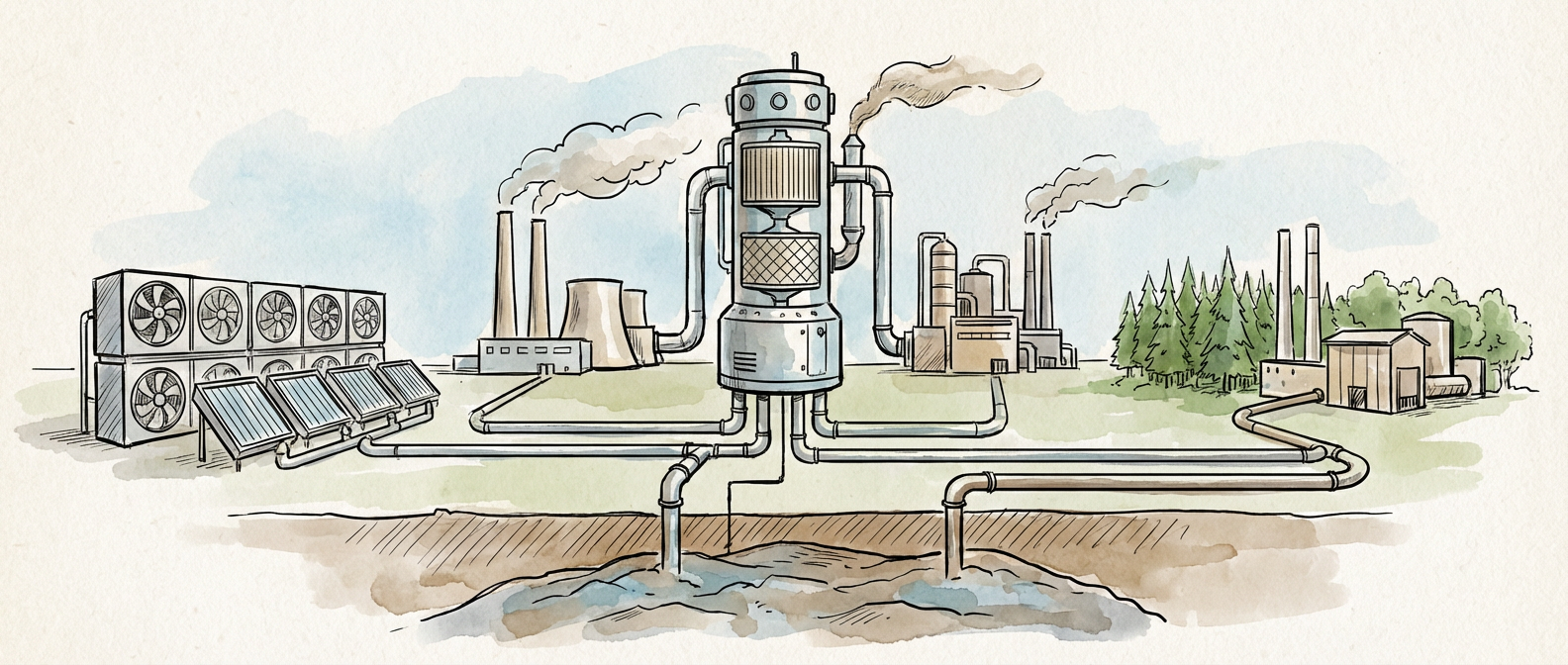
Illustration for Beyond Storage: How Next-Generation Carbon Capture Could Reshape Industrial Chemistry

The Chemistry Revolution: From Waste Disposal to Resource Generation

Here’s where carbon capture technology starts looking less like environmental cleanup and more like industrial transformation. The CO2 captured by these advanced systems isn’t headed for underground storage. It’s becoming the feedstock for an entirely new category of manufacturing processes. Electrochemical CO2 reduction, powered by renewable electricity, can convert atmospheric carbon dioxide directly into ethylene, methanol, and even jet fuel.

The efficiency gains in CO2 electroreduction over the past five years have been staggering. Copper-based catalysts that achieve 60-70% selectivity for multi-carbon products like ethylene are moving from laboratory demonstrations to pilot-scale systems. More intriguingly, tandem catalyst designs that couple CO2 reduction with water oxidation are achieving energy efficiencies that approach what would be economically competitive with fossil fuel-derived chemicals, assuming continued decreases in renewable electricity costs.

The second-order implications here deserve serious consideration. If we can manufacture commodity chemicals from atmospheric CO2 using renewable electricity, we’re doing more than creating a carbon-neutral industrial process. We’re potentially creating a carbon-negative one. Every kilogram of ethylene produced from captured CO2 is roughly 1.57 kilograms of atmospheric carbon converted into useful products rather than being emitted from petroleum cracking.

The Infrastructure Cascade: When Carbon Becomes Currency

This shift toward CO2 utilization rather than simple storage triggers a fascinating infrastructure evolution. Traditional carbon capture projects require massive pipeline networks to transport CO2 to geological storage sites, an expensive proposition that has limited deployment to regions with suitable underground formations. But when CO2 becomes a valuable industrial input, the economic geography completely changes.

Consider what happens when steel plants, cement manufacturers, and chemical refineries begin treating atmospheric CO2 as a raw material rather than a waste product. The optimal locations for these facilities shift from proximity to fossil fuel sources toward areas with abundant renewable electricity and appropriate CO2 concentrations. This isn’t speculative futurism. Companies like Carbon Engineering are already planning integrated facilities that capture CO2 directly from air and convert it to synthetic fuels on-site.

The transportation infrastructure implications are equally profound. Instead of building pipelines to carry CO2 away from industrial centers for storage, we might see networks designed to distribute captured CO2 to facilities that can utilize it. This reversal creates entirely different economic incentives for carbon capture deployment and could accelerate adoption in regions where geological storage isn’t feasible.

The energy storage potential of this infrastructure cascade shouldn’t be overlooked either. CO2-derived methanol and synthetic hydrocarbons can work as long-term energy storage media, converting excess renewable electricity into chemical bonds that can be released when needed. This creates a direct link between carbon capture technology and grid-scale energy storage, two of the most critical challenges in renewable energy deployment.

Timeline Realities: Distinguishing Laboratory Promise from Commercial Deployment

The enthusiasm around these developments needs tempering with realistic timelines and technical constraints. While MOF-based direct air capture shows impressive performance in laboratory settings, the path to gigaton-scale deployment faces significant materials science challenges. The most promising MOF structures require exotic metal centers or complex organic synthesis that would be prohibitively expensive at industrial scales.

Electrochemical CO2 conversion faces its own scalability hurdles. The copper catalysts showing excellent selectivity in research settings typically degrade within hundreds of hours of operation because of surface oxidation and structural changes. Industrial chemical processes require catalyst lifetimes measured in years, not months. Recent work on single-atom catalysts and oxide-derived copper surfaces is promising, but we’re likely looking at 5-8 years before these systems achieve the stability needed for commercial deployment.

More pragmatically, the economics of CO2 utilization depend heavily on carbon pricing mechanisms and fossil fuel costs. Current pilot projects demonstrate technical feasibility, but economic competitiveness requires either carbon taxes in the $100-150 per ton range or substantial continued decreases in renewable electricity costs. Neither is impossible, but both depend on policy and market developments beyond the control of technology developers.

The Convergence Point: Where Climate Technology Meets Industrial Revolution

What makes this technological moment particularly compelling is how carbon capture innovations are converging with advances in renewable energy, materials science, and industrial automation. The combination of increasingly cheap renewable electricity, precisely engineered MOF materials, and robust CO2 conversion catalysts creates the possibility of carbon-negative industrial processes at scales that could genuinely impact atmospheric composition.

The near-term trajectory, the next 3-5 years, will likely see continued improvements in direct air capture efficiency and the first commercial-scale CO2 utilization facilities producing specialty chemicals and fuels. These early projects will establish the technical precedent and economic framework for larger deployments. The medium-term trajectory, 5-15 years, could see carbon capture and utilization becoming standard components of industrial infrastructure, particularly in regions with aggressive climate policies and cheap renewable energy.

The longer-term implications stretch into genuinely transformative territory. If atmospheric CO2 becomes a primary feedstock for industrial chemistry, the carbon cycle itself becomes a managed system rather than an environmental constraint. We’re potentially looking at the emergence of a circular carbon economy where atmospheric composition is actively regulated through industrial processes rather than just emission reductions.

The research papers arriving weekly in journals like Nature Energy and Science continue pushing these technological boundaries forward, each study adding another piece to what might become a fundamentally different relationship between human industry and atmospheric chemistry. The question isn’t whether these technologies will work. The question is how quickly they can scale and what industrial landscape they’ll create along the way.

When Space Dreams Meet Reality: Why Commercial Spaceflight’s Growing Pains Signal Progress

The Messy Business of Making Space Accessible

SpaceX’s Starship program is the perfect example of how messy commercial spaceflight really gets. After multiple explosive test flights that sent debris raining across Texas beaches, the massive rocket finally achieved orbital flight capabilities and now carries commercial payloads. Here’s what those explosions taught us: breakthrough innovation means spectacular failures aren’t obstacles—they’re required reading.

When Space Dreams Meet Reality: Why Commercial Spaceflight's Growing Pains Signal Progress
When Space Dreams Meet Reality: Why Commercial Spaceflight’s Growing Pains Signal Progress

Traditional aerospace spent decades on exhaustive ground testing and conservative timelines. New commercial space companies borrowed Silicon Valley’s playbook instead: fail fast, learn faster, iterate continuously. At first, this looked reckless to traditional aerospace engineers. But it’s cut development cycles from decades to years while slashing costs.

Critics pointed to early Starship explosions as evidence of dangerous corner-cutting. Fair enough. But these visible failures hid sophisticated data collection efforts. Each explosion provided terabytes of real-world performance data that no computer simulation could replicate. The willingness to accept public failure to achieve rapid iteration has completely changed how we develop space technology, though it’s generated plenty of controversy and regulatory headaches along the way.

Government Programs Grappling with Commercial Reality

NASA’s Artemis program, aiming to return humans to the lunar surface between 2026 and 2027, is a fascinating hybrid of traditional government oversight and commercial innovation. The program relies heavily on commercial partners while maintaining the risk-averse culture that has long characterized government space missions. This creates inevitable friction between rapid commercial development cycles and methodical government validation processes.

The challenge gets particularly tricky when commercial failures hit government timelines. When SpaceX’s early Starship tests exploded, they didn’t just delay commercial objectives—they potentially impacted Artemis scheduling. Government programs must now account for commercial development uncertainty while maintaining public confidence in mission safety and timeline commitments.

This has forced NASA to develop new risk management frameworks that acknowledge commercial iteration cycles while protecting astronaut safety. NASA news frequently highlights this balancing act between innovation speed and safety validation, revealing the learning curve required when traditional agencies work with commercial disruptors.

Infrastructure Development and Its Inevitable Setbacks

Commercial space station development through companies like Axiom Space and Blue Origin is another area where ambitious timelines meet complex realities. These companies received significant NASA contracts to develop replacements for the International Space Station. Early progress has revealed the immense challenges of creating habitable space environments from scratch. Initial design reviews uncovered fundamental issues requiring complete system redesigns, pushing timelines well beyond original projections.

The regulatory environment adds more complexity. Asteroid mining frameworks under development at the United Nations level attempt to establish property rights and operational protocols for an industry that barely exists. Meanwhile, mandatory space debris mitigation rules for new satellite operators create compliance costs that many startups struggle to handle. These regulatory developments are necessary for long-term sustainability, but they inevitably slow commercial development and increase operational complexity.

Industry publications like Space News industry regularly document how these regulatory requirements force companies to redesign missions, alter satellite configurations, and implement tracking systems that eat up significant portions of development budgets. Creating workable regulations for unprecedented activities requires constant adjustment as new technical capabilities emerge.

Economic Projections Versus Market Development Reality

Projections suggesting a lunar economy worth $170 billion by 2040 reflect tremendous optimism about commercial space development, yet current market realities suggest a more complex path forward. These projections assume rapid development of lunar infrastructure, reliable transportation systems, and profitable commercial activities beyond government contracts. Each assumption carries significant technical and economic risks that current development timelines struggle to address.

The satellite internet market provides useful context about the gap between projections and reality. Multiple companies launched ambitious constellation plans with aggressive timelines. Technical challenges, regulatory hurdles, and market development difficulties have delayed profitability for most operators. Similar challenges await lunar commercial development, where transportation costs, life support systems, and resource extraction technologies remain largely unproven at commercial scales.

The learning process means acknowledging that economic projections often underestimate development complexity while overestimating market demand timelines. Companies that recognize this reality and build adaptive business models around iterative development cycles position themselves better for long-term success than those committed to rigid timeline projections.

Embracing Uncertainty as Competitive Advantage

The most successful commercial space companies have learned to treat uncertainty and failure as competitive advantages rather than obstacles. This mindset shift enables rapid experimentation with novel technologies, business models, and operational approaches that traditional aerospace companies cannot easily replicate because of institutional risk aversion and stakeholder expectations.

Companies like SpaceX have proven that public failure tolerance, combined with systematic learning from setbacks, accelerates overall development progress despite individual project failures. This approach requires sophisticated data collection capabilities, rapid analysis cycles, and organizational cultures that reward learning from failure rather than punishing unsuccessful outcomes.

The broader commercial space industry now faces a critical point where early adopters of this experimental mindset gain significant advantages over competitors committed to traditional development approaches. Companies that successfully balance rapid iteration with safety requirements while managing stakeholder expectations around inevitable setbacks will likely dominate emerging space markets.

The future of commercial spaceflight depends not on eliminating failures but on developing better systems for learning from them quickly and systematically. As this industry matures, our understanding of space development challenges will improve, but the fundamental requirement for experimental thinking and failure tolerance will remain central to continued progress. What aspects of commercial space development do you find most intriguing or concerning as we navigate this unprecedented expansion beyond Earth?

CRISPR’s Clinical Reality Check: Promise, Precision, and Persistent Challenges in 2024

The First Approved Victories Mark a Big Step Forward

The approval of exagamglogene autotemcel (Lyfgenia) by the FDA in late 2023 is more than a regulatory milestone. This CRISPR-based treatment for sickle cell disease shows that gene editing has moved from experimental promise to clinical reality, though with significant caveats that go far beyond the headlines. The therapy works by editing patients’ bone marrow stem cells ex vivo, correcting the genetic mutation responsible for the misshapen red blood cells that characterize this devastating condition.

What the approval process revealed illuminates both the potential and the persistent complexities of translating CRISPR technology into widespread medical practice. Clinical trials showed remarkable efficacy in reducing vaso-occlusive crises, the painful episodes that define much of the patient experience in sickle cell disease. But the treatment protocol requires intensive conditioning chemotherapy, extended hospital stays, and carries risks that demand careful patient selection and long-term monitoring.

The regulatory scrutiny surrounding this approval also set precedents for how future CRISPR therapies will be evaluated. Safety data requirements, manufacturing standards, and post-market surveillance protocols now provide a framework that subsequent gene editing treatments must navigate. This regulatory environment reflects hard-learned lessons about the difference between promising laboratory results and the messy realities of human biology.

In Vivo Editing Moves Beyond the Laboratory

While ex vivo gene editing has claimed the early clinical victories, direct in vivo applications are showing compelling results in conditions previously considered untreatable. Ongoing trials targeting transthyretin amyloidosis represent a particularly important development, as they demonstrate CRISPR’s ability to precisely modify disease-causing genes within the human body without requiring cell extraction and reinfusion procedures.

These trials use lipid nanoparticle delivery systems to transport CRISPR components directly to the liver, where they disable the production of misfolded transthyretin proteins that accumulate in heart and nerve tissues. Early results suggest sustained reductions in circulating transthyretin levels, with some patients showing improvements in cardiac function and neurological symptoms. The approach creates a paradigm shift toward treating genetic diseases at their source rather than managing their downstream effects.

The technical challenges overcome in these trials go beyond simple gene targeting. Researchers have developed sophisticated delivery mechanisms that preferentially target specific cell types while minimizing exposure to off-target tissues. Broad Institute CRISPR research has been key in developing these precision delivery approaches, which may prove applicable to numerous other genetic conditions affecting internal organs.

Precision Improvements Address Safety Concerns

The evolution of CRISPR technology itself has addressed many early concerns about unintended genetic modifications. Recent developments in base editing and prime editing have reduced off-target modification rates to below 0.1 percent in many applications. That’s a dramatic improvement over first-generation approaches that sometimes showed off-target rates exceeding 1 percent.

Base editing techniques, which can make precise single-nucleotide changes without creating double-strand DNA breaks, have emerged as particularly promising for correcting point mutations that cause genetic diseases. These approaches use modified CRISPR systems that can convert one DNA base to another with remarkable precision, avoiding the cellular DNA repair processes that sometimes introduce unwanted changes. Prime editing takes this precision even further, enabling insertions, deletions, and replacements with minimal off-target activity.

These technological advances have big implications for clinical applications. Lower off-target rates translate directly into improved safety profiles, potentially expanding the pool of patients who can benefit from gene editing therapies. The precision improvements also enable treatment of genetic variants that were previously considered too risky to target, opening therapeutic possibilities for rare diseases that affect small patient populations.

Regulatory Divergence and Ethical Complexities

The regulatory landscape for gene editing technologies continues to evolve in ways that reflect fundamental disagreements about risk assessment and technological governance. Agricultural applications have highlighted these divisions most clearly, with the United States and European Union developing markedly different frameworks for evaluating gene-edited crops. These divergent approaches carry implications that go well beyond agriculture, influencing how different jurisdictions approach gene editing regulation across all applications.

The ethical dimensions of gene editing have intensified following the controversial germline editing experiments conducted by He Jiankui, which resulted in the birth of gene-edited children without proper oversight or consent protocols. This case has galvanized the scientific community around the need for robust international governance frameworks, particularly for heritable genetic modifications that could affect future generations. The ongoing debates reflect deeper questions about the appropriate boundaries of human genetic enhancement and the mechanisms needed to prevent premature or inappropriate applications of powerful genetic technologies.

Professional organizations and regulatory bodies have responded by developing more detailed guidelines for germline editing research, including requirements for extensive preclinical testing, community engagement, and international coordination before any clinical applications. STAT News biotech coverage has highlighted how these evolving standards reflect ongoing tensions between scientific advancement and social responsibility.

Economic Barriers and Access Challenges

The transformative potential of CRISPR therapies faces stark economic realities that threaten to limit their impact. Current gene therapy treatments carry price tags ranging from $1 million to $3 million per patient, reflecting the complex manufacturing processes, extensive clinical testing requirements, and limited patient populations that characterize this emerging field. These costs place curative treatments beyond the reach of many patients and strain healthcare systems already dealing with rising medical expenses.

The economics of gene therapy manufacturing present unique challenges that differ fundamentally from traditional pharmaceutical production. Each treatment often requires individualized cell processing, specialized facilities, and highly trained personnel. These factors create inherent cost pressures that may persist even as technologies mature and production scales increase. Some analysts project that costs may decrease as manufacturing processes improve and competitive pressures emerge, but the timeline and magnitude of such reductions remain uncertain.

Insurance coverage decisions will ultimately determine patient access to these therapies, and early indicators suggest a complex landscape ahead. Some insurers have begun developing value-based pricing models that tie reimbursement to long-term clinical outcomes, potentially aligning financial incentives with patient benefits. However, the long-term nature of gene therapy benefits creates challenges for traditional healthcare payment models designed around shorter treatment cycles.

The intersection of scientific capability and healthcare economics will likely define the next phase of gene editing development. As researchers continue pushing the boundaries of what’s technically possible, questions of affordability and access become increasingly central to determining whether these advances translate into meaningful improvements in human health. Understanding these dynamics requires engagement with both the scientific literature and the broader policy discussions shaping the future of precision medicine.