Can Robots Change the Way We See Art?

Howdy, digital amigos! Today’s diatribe dives into a delightful union between canvas and code, where art meets algorithm—Artificial Intelligence in the realm of creative arts. Let’s explore how machines are changing creativity itself as robots throw paint (or rather code) onto canvases, giving rise to an entire age of techno-artistry. Grab your digital brushes, or at least an iced coffee, and let’s wade into the creative chaos of AI and art.

The Intersection of Creativity and Computation

In the not-so-distant past, the thought of computers creating art was dismissed as somewhere between sci-fi and surreal. Fast forward to today, and we’re on the verge of giving digital Picassos a Pulitzer. But how did we get here, and why does it matter? Well, let’s break it down into bite-size bits.

A Brief History of AI in Art

Somewhere in the early 2010s, the concept of using algorithms to generate art quietly tiptoed into the creative world. It all started innocently enough, with simple generative designs that were more “Google Doodle” than “Guernica.” Fast forward a decade, and we’ve got AI-created pieces auctioned at Sotheby’s for more than my annual salary. Neural networks grew into art’s new avant-garde, making it a genuinely thrilling tech development.

Machines Making Masterpieces

So, how exactly do these digital da Vincis work? It all boils down to algorithms that’ve been fed more images than a human can view in a lifetime. By learning from these inputs, AI can generate original art. Neural networks, like Generative Adversarial Networks (GANs) that sound way scarier than they are, “learn” by doing the art equivalent of a squabble. One part designs, another critiques, until they reach a compromise.

It’s kind of like a buddy film but with less bickering and more machine learning. Don’t picture rabid robots battling, though. I already did, and it’s exactly as entertaining as you’d expect.

Robots and Renaissance: The Implications

Stepping past the initial wow factor of machine art, let’s get thoughtful here. What does AI’s entrance onto the art scene mean for the industry, for artists, and for art lovers like us?

A New Dimension of Expression

At its core, AI in art offers a bold expansion of possibilities. It allows artists, digital and otherwise, to explore territories previously limited by imagination and manual skills. With machines as their muse, creatives can probe art spaces that breathe life into new forms of expression.

Artists have teamed up with tech to produce multi-dimensional, interactive digital art exhibitions that evolve and respond to audience interaction, going beyond traditional viewing. You’ve gotta admit, that’s pretty rad!

Democratizing Artistic Creation

Another cool thing here is how AI levels the playing field. Those without the natural ability to sketch lifelike portrayals can now tap into artistic creativity through technology. It’s like a universal invite to the party where everyone gets past the velvet rope.

Picture this: art schools might one day use AI to teach aspiring artists techniques ten times faster than my latest attempt to recreate a happy little tree. It could happen!

Challenges and Controversies

But hold your horses. It’s not all smooth sailing on the seas of slick creativity. This whole scene has stirred up a paint pot of debates and challenges.

Attribution and Ownership

Once we venture down the mega-pixelated rabbit hole of originality and authorship, many questions arise. Who’s the rightful creator? Is it the programmer, the machine, or some weird mix of both? If there’s money involved, trust me, someone’s claiming it and likely arguing about it.

Copyright laws find themselves having a hefty existential crisis. Questions pop up like Whac-A-Mole about who truly “owns” an AI-generated piece, bringing tons of legal implications. Some argue for art algorithms to get recognition in their own right. Others worry we’re handing over creative freedom to the very machines we designed.

Job Security for Human Artists

In darker corners of the art scene, robots are met with digital pitchforks by folks fearing the obsolescence of the human artist. While automation has replaced many jobs, the subjective soul behind traditional art creation feels different. Most agree machines can’t replicate emotion, inspiration, or a dash of the humanity that makes art so darn great. But they can enhance it.

The Future: Painting a Picture of Possibility

Looking ahead, it’s worth embracing the possible as we sort through the pixelated pandemonium brought by AI art. Machines and humans can create stunning collaborations. Robots help artists reach previously unimaginable efficiencies and forms of beauty.

Speculating About Tomorrow

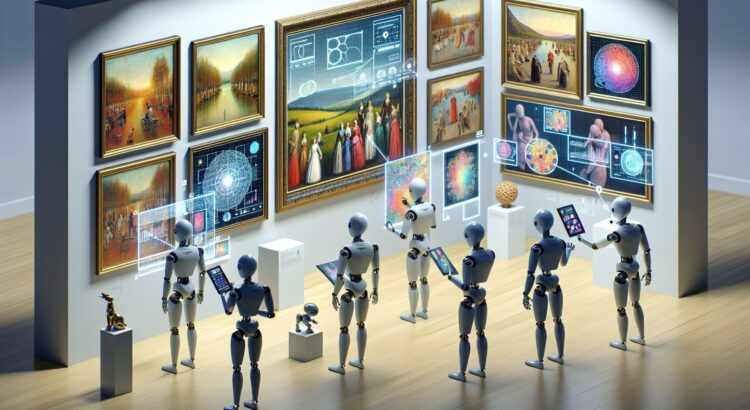
Picture a future where interactive, AI-aided art shows evolve dynamically as patrons walk through museums. Pieces that “listen” and transform based on the viewer’s emotions or reactions using sensors and sentiment recognition gadgets. We’re not there quite yet, but the stage is set for an art revolution.

As we geek out about the limitless future, let’s not forget our roots in charcoal and clay. Instead, picture them as jumping-off points for what’s possible. In this brave new art world, balance isn’t only desirable, it’s necessary.

Bringing It Home

The conversation around AI in art isn’t fading anytime soon, and I’m all for watching where it leads us! As we team up with the smart machines out there, let’s build a techno-utopia that fuses human and machine creativity in real collaboration.

So, what do you think about machines hitting the art scene? Does the idea of dynamic, intelligent, machine-generated art spark your imagination, or is it just another buzzwordy trend? Drop your thoughts in the comments, or don’t. It’s all cool. Art’s subjective after all! Until next time, enjoy the digital kaleidoscope that’s the future of creativity.
The New Frontier of Longevity: Living to 150 and Beyond

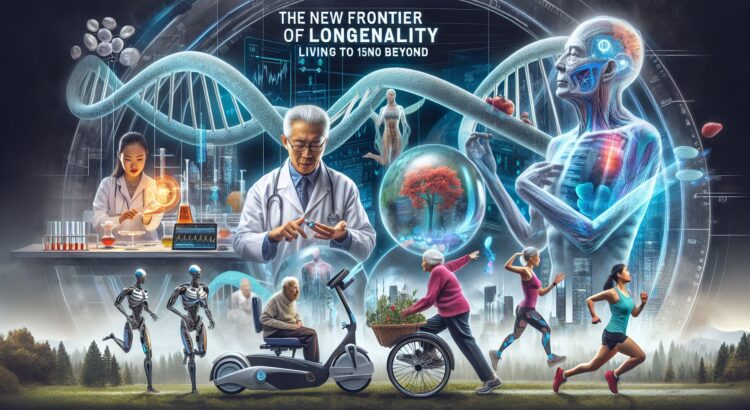
Hey tech enthusiasts, dreamers, and fellow futurists! Today we’re diving into a topic that feels like it’s been ripped straight out of a sci-fi novel — longevity. Yep, we’re talking about humanity’s quest to extend our lifespan, not just a few years, but by decades, maybe even to the mind-boggling age of 150. Sound crazy? Hang tight, because I’m about to take you on a journey through the latest breakthroughs, a look ahead into our future world of centenarian communities, and what life might just look like when you’re blowing out 150 candles.

The Science of Aging: A Quick Primer

Before we leap into what’s new, let me set the stage with a quick primer on the science of aging. At its core, aging is the gradual deterioration of function at the cellular level across our body. For years, the gritty details of this process were like a puzzle with missing pieces. But researchers are starting to crack this code like never before!

Scientists have identified cellular processes like telomere shortening, DNA damage, and the accumulation of zombie-like senescent cells that drive aging. And guess what? They’re not just documenting the inevitable. They’re actively working on ways to reverse or slow down these processes.

The biotech industry is exploding with innovation right now. Companies like Calico (Google’s longevity spinoff) and Altos Labs are throwing serious money at this problem and using AI to speed up research. It’s an all-out race, and everyone wants to win.

The Latest Breakthroughs: What’s Cooking?

Now, let me walk you through some of the most exciting advancements happening right now.

Telomeres: The Timekeepers of Our Cells

Telomeres are those little caps on the ends of our DNA strands that shorten as we age. They’re getting famous in the longevity industry. Think of them as those twisty ties on bread, sealing in the freshness. Teams like the ones at Stanford are working on ways to lengthen these telomeres using a modified type of RNA. Early findings already show promise in rejuvenating human cells. While it’s not yet a commercialized therapy, the potential is huge.

Senescent Cells: Zombie Attack!

Now let’s tackle those “zombie” cells. Yes, I’m using the Z-word, but these cells are the troublemakers that stop dividing but refuse to die, causing inflammation and chaos in our bodies. The quest to eliminate these cells using senolytics is heating up fast. Unity Biotechnology is one contender in this space, targeting age-related diseases that might be caused by these cellular zombies.

Mitochondrial Manipulation: The Powerhouses

Everyone’s heard of mitochondria — the cell’s powerhouse. But did you know they play a sneaky role in aging? Researchers are figuring out how to tweak mitochondrial function to delay aging. The science here is complex, but the basic idea is simple: fix the power source, fix the aging.

The Upside: Living Longer and Better

Alright, so let’s say all this fantastic science comes to fruition. What might our lives look like if we all suddenly start receiving birthday cards from great-great-grandkids? It’s not just about extending life. It’s about enhancing health — the holy grail of longevity research.

Imagine reaching triple digits without dealing with the typical age-related health decline. You’re living life to the fullest, racking up those frequent flyer miles, maybe even skydiving at 110 (with a chute packed by a carefully vetted drone, naturally). This seems almost in reach, with progress not just curing age-related diseases, but truly making aging itself a more graceful experience.

Ethical Considerations: Pandora’s Box?

But before we all jump onto the 150-year train, let’s play devil’s advocate for a moment. What happens when we all start living much longer lives? What about the societal and ethical implications? Thankfully, smart minds are thinking about this too.

Overpopulation and Resource Allocation

Think Earth can handle a surge in population if nobody checks out? We’ll need serious upgrades to our resources and maybe technological solutions like vertical farming or space travel to set up that Martian colony Elon Musk has been tweeting about.

Economic Impacts

Living longer could completely reshape our economy. The structure of retirement, insurance, and even employment will change. Picture an 80-year-old intern finally taking on their dream startup position. Weird but full of possibilities.

Accessibility and Health Inequality

And of course, how can we make sure longevity treatment isn’t just a privilege of the ultra-rich? Accessibility beyond wealth barriers is crucial. Without it, we risk making existing health disparities even worse.

The Future: Our Speculative Horizon

So, if you peer into my crystal ball, what might our future actually hold in this new era of longevity?

In a perfect world, these technologies will democratize health, making quality of life a universal right. The challenges may seem daunting, but the relentless pursuit of knowledge and the dedication of innovators across the globe give me hope. I look forward to one day raising a glass (of nutrient-engineered, life-extending cocktail, of course) at my 150th birthday bash, clinking with fellow centenarians across miles of interconnected wisdom and laughter.

So be optimistically cautious, support your local scientists, and keep your mind open to what’s coming. After all, we’re paving roads to a future where “old” is a moving target, and life might be fuller and richer than we’ve ever known.

Catch you tomorrow with yet another marvel in our techno-utopian escapades! 🍀

Exploring the Longevity Revolution: How Emerging Technologies Are Redefining Human Lifespan

In recent years, we’ve seen major advances in technology that are changing how we think about aging and longevity. The idea of extending human lifespan used to belong in science fiction movies. Now it’s actually happening in labs and research centers around the world. This new era, often called the “Longevity Revolution,” is driven by breakthroughs in healthcare, biotechnology, and artificial intelligence. I want to explore this fascinating world of longevity technologies and how they promise not just to extend life, but to make those extra years worth living.

The Science of Staying Young: Longevity Breakthroughs

A New Era in Healthcare

Recent developments in biogerontology (the study of biological aging) are revealing how we might actually extend human lifespan. Scientists are getting remarkably good at manipulating the genetics of age. They can now identify and target specific genes and molecular pathways that control aging. When they alter these pathways, it becomes possible to delay aging and sometimes even reverse it.

One exciting breakthrough involves senolytic drugs. These compounds can selectively target and eliminate senescent cells, which pile up as we age and contribute to age-related diseases. Research shows these drugs could potentially “clean up” our cellular environment, reducing inflammation, boosting tissue regeneration, and improving how well we handle stress. Early trials look promising, though we’re still in the early stages.

The Role of Artificial Intelligence

AI has become a powerful force in the race to extend human life. AI algorithms can sift through massive datasets and identify patterns and potential therapeutic targets faster and more accurately than humans ever could. These sophisticated tools are speeding up drug discovery and helping create personalized medicine approaches.

AI is also changing predictive analytics in a big way. By combining genetic, environmental, and lifestyle data, AI systems can model someone’s biological age and predict longevity with impressive precision. The goal is to give people the data they need to make lifestyle decisions that could actually extend their lives.

Biotechnology: The Genomic Edit

CRISPR-Cas9 gene-editing technology might be the most impressive achievement in modern biotechnology. This tool lets scientists edit genes with incredible precision and could lead to treatments for age-related diseases at their genetic source. Scientists have already used CRISPR to repair DNA in cells, opening up possibilities to fix genetic disorders that contribute to aging.

Telomere research is another promising area. Telomeres are the “end caps” of chromosomes, and as they shorten, cells age and function worse. Scientists are working on techniques that combine CRISPR with telomere biology to rejuvenate cells by extending these telomeres again, potentially reversing cellular aging.

Quality as the New Longevity Metric

Quantifying Life Quality

As longevity science progresses, researchers are emphasizing that living longer isn’t enough. We need to live well too. The concept of “healthspan” (the period when someone stays healthy and free from chronic disease) has become central to longevity research. Breakthroughs that extend healthspan matter just as much as those that extend lifespan.

Wearables and smart health devices are letting people monitor their vital signs and health conditions in real-time. This changes how quickly they can respond to potential health issues. This proactive approach to health management could keep people healthier for longer and improve their quality of life substantially.

Longevity and Society

While these scientific advances are exciting, they also raise some big societal questions. How will work change if retirement age moves to 80 or beyond? What happens to resources and sustainability when people live much longer? And maybe most importantly, how do you plan a fulfilling life that might stretch over a century or more?

Addressing these issues requires collaboration between policy makers, healthcare providers, and technologists. We’ll need their combined efforts to redesign society’s infrastructure to support much longer-living populations. This means new retirement models, different educational structures that support lifelong learning, and healthcare systems that use technology to maintain healthspan.

Challenges to Overcome

Ethical Concerns and Equitable Access

The longevity revolution faces some serious hurdles. Ethical considerations are everywhere, including questions about genetic modifications and the risk of creating a society divided between those who can afford longevity treatments and those who can’t.

Bioethicists are working hard to develop frameworks that ensure longevity technology advances follow principles of equity and fairness. Making sure life-extending technologies are available to everyone, not just the wealthy, is essential to avoid making existing social inequalities worse.

Technological Hurdles

Despite the optimism, the scientific community knows that longevity technology is still in its early stages. Many proposed treatments and interventions are still in early trial phases. Human biology is incredibly complex, which means interventions can have unintended consequences. That makes it risky to implement them widely without thorough investigation.

Conclusion: A Brave New (Longevity) World

The longevity revolution captures imaginations and drives innovations that could redefine human existence. We’re at the edge of an era where science might offer everyone the chance to live longer, healthier lives. Artificial intelligence, biotechnology, and new health management models are coming together to fight the problems of aging, aiming for both longer life and better quality of living.

There are still challenges ahead, both technological and societal. But the momentum toward a future where living to 100 becomes normal rather than exceptional keeps building. The coming years will surely reveal surprising developments in this journey, showing us new paths to a future where humanity’s lifespan and healthspan both continue to expand.

Whether you view this future with skepticism, hope, or mixed feelings, there’s no denying we’re living through an incredible age of discovery. We’re pushing the boundaries of what it means to grow old. As we navigate these uncharted waters, one thing is clear: the longevity revolution isn’t just about adding years to life, but adding life to years. I’ll keep following how technology continues to shape the future of human longevity.

Unlocking the Potential: Artificial Intelligence Ushers in a New Era of Creativity

Artificial Intelligence is changing nearly every industry, from healthcare to finance. Today, we’re looking at a field where AI’s influence might be less obvious but just as transformative: the world of creative arts. Picture a future where artists and writers work alongside AI, using its power to not just improve their work but to create entirely new types of art. If you’re curious about how machines can work with human creativity instead of against it, you’re in the right place.

When Machines Started Making Art

The idea that machines can only do boring, computational tasks is quickly becoming outdated. AI has already shown it can write text, compose music, and even paint. While skeptics see artificial intelligence as a threat to creative jobs, I think we’re seeing something more like a modern Renaissance—an era where creativity gets a serious upgrade through human-machine collaboration.

Think about an AI-assisted novel where plot twists change in real-time based on what readers want, or a painting that shifts its style based on the artist’s mood. This isn’t science fiction anymore. These things are happening right now, creating new possibilities in creative arts that we’ve never seen before.

The Algorithm as a Muse

AI as a creative partner isn’t just theoretical—it’s happening. Algorithms can inspire artists who are stuck in creative ruts. Machine learning models understand what makes art connect with people. They can create first drafts or suggest edits, freeing up creators to focus on what makes them uniquely human: intuition, empathy, and emotion.

Take OpenAI’s GPT series. It shows how machines can write compelling stories or help with creative writing by suggesting phrases, plot developments, or character arcs. AI tools like DALL-E create visuals from descriptions, giving artists a whole new world of possibilities to explore.

New Tools for Storytelling

AI’s impact on storytelling is both disruptive and exciting. AI-powered platforms can create stories tailored to what each person likes. These systems analyze data, track what keeps users engaged, and adapt storylines in real-time for personalized content.

Filmmakers are jumping on this too. Software can now help with scriptwriting, editing, and post-production work, cutting down the time and money spent on these tasks. Visual effects powered by machine learning can bring imaginary worlds to life with incredible detail at a fraction of the usual cost.

Art Meets Science: The Role of Generative Adversarial Networks

One of the most impressive technologies driving this change is the Generative Adversarial Network (GAN). GANs have taken machine-generated art from abstract blobs to visually striking pieces. Artists like Mario Klingemann are already using these systems to create new forms of art that challenge how we think about aesthetics.

GANs work by having two neural networks compete—one creates artworks (the generator) and the other judges them (the discriminator). The result is an ongoing evolution that brings machine-generated art closer to human standards with each iteration.

Music Reimagined

In music, AI is pushing boundaries in composition, sound engineering, and audio production. Platforms like Amper Music or AIVA can generate entire compositions without human input, while musicians use AI tools to mix tracks or create synthetic vocals.

AI doesn’t replace musicians. Instead, it’s an incredible tool for amplifying creative expression. By analyzing thousands of compositions, AI can give musicians new approaches or instruments that help them develop their unique sound.

Challenges and Ethical Considerations

The opportunities are exciting, but integrating AI into the arts brings real challenges. Questions about intellectual property, artistic credit, and the blurred lines between human and machine-generated works complicate everything. We need ethical guidelines that evolve with the technology to make sure AI helps human creativity instead of hurting it.

Copyright and fair use laws need updates for a world where machines contribute to art. Artists should know where their input data comes from while being transparent about AI’s role in their creative process. Cultural bias in training data can lead to skewed or biased outputs, which means we need diverse datasets and inclusive programming.

AI as a Creative Partner: What’s Next?

As AI continues moving into creativity, we can expect entirely new forms and genres of art to emerge. These creative partnerships will challenge traditional ideas about authorship, redefine what it means to create, and give us new tools for self-expression.

Future developments might include AI systems that understand emotions through sentiment analysis, allowing collaborative pieces that aren’t just technically good but emotionally powerful. As more creators adopt these technologies, we’ll see boundary-breaking art that isn’t limited by human constraints.

Conclusion: A New Era of Human-Machine Creativity

The meeting of art and AI represents a major shift that’s less about replacing human creatives and more about improving the tools they have. By creating alongside AI, artists get access to expanding possibilities, inspiring new ideas, and redefining what’s possible in creative work.

In the next decade, we might not be able to tell which masterpieces were made by humans and which were co-created with machines. And maybe that won’t matter. In the combination of human intuition and machine precision, a new era of artistic expression is waiting.

As we stand at the edge of this creative change, the question isn’t whether AI will change the arts, but how it will improve them. Whether it’s a complex dance between code and brush stroke, or a partnership between pen and algorithm, the creative industry is ready to embrace an era where technology meets human ambition.

In a way, art is eternal. AI is just writing the next chapter of its story.

How to Find the Cheapest Auto Insurance Company

The best car insurance company is the one that actually pays up when you need it most. Your insurer needs solid finances to handle claims without going under. Too many auto insurers lack this financial backbone and end up charging you higher rates to stay afloat. If you’re putting serious money into insurance coverage, this situation can really hurt your wallet.

best auto insurance

If this sounds familiar, don’t panic. You can take steps to land the best auto insurance policy you qualify for. Start by comparing quotes from different car insurance companies. For example, check out this progressive insurance review. Your quotes depend on several factors: your age, driving history, and other personal details that insurers care about.

Here’s something many people get wrong: they think a clean driving record won’t get them discounts. That’s not true at all. Defensive driving courses exist for a reason, and they’re not just for bad drivers. These 8-12 week programs teach you safety fundamentals and traffic laws. Insurance companies absolutely factor your driving record into their rates, so keeping it spotless pays off big time.

Your coverage amount also affects what you pay. If you only carry your state’s minimum liability requirements, you probably won’t qualify for multi-car discounts. But many insurers offer these discounts if you can prove you have adequate coverage across all your vehicles.

Several other factors bump up your insurance costs. Adding coverage after you first bought your policy often means paying more than necessary. Things like adding a new driver or tacking on a non-owner policy to your existing coverage can spike your rates pretty quickly.

Allstate and Esurance rank among the country’s most popular insurers. Allstate has some of the best rates for auto-owners insurance. Esurance works with anyone who has an active checking account. Both companies cover a broad range of car owners across the United States. If you want to add another vehicle to your policy, you should find options that work for you. Current Allstate customers get discounts when they buy auto-owners insurance through the company.

You can also pick between collision-only or comprehensive coverage for your car insurance policy. Collision coverage protects you if you’re in an accident. Comprehensive costs more because it covers damage from natural disasters and vandalism. These incidents often happen in rural areas with lower crime rates, but your premiums will still be higher for comprehensive coverage. If you only need collision coverage, make sure your insurer actually offers this option.

The cheapest car insurer in your state is probably a company that only operates in a handful of states plus Washington D.C. These insurers don’t face the same requirements as national companies, which keeps their quotes low. They’re cheap because they spend heavily on advertising to attract customers. When you contact an insurer that only covers a few states and D.C., you’re getting their lowest available prices. They’ll also pass along any discounts you qualify for, like good driver discounts.

Deciding If You Are Going to Buy a Prize For Your Solitaire Cube Rewards

If you have a solitaire cube, you’ve probably ended up with a whole collection of other solitaire-themed stuff too. Matching card sets, chess boards, maybe some other puzzle games. I get it – once you start down this rabbit hole, it’s hard to stop. These collections work great if you’re into games yourself, or if you just want something interesting sitting around your house that actually gets used.

Solitaire for cash games are pretty straightforward to pick up, and honestly, they can keep you busy for hours. But here’s the thing – if you’re thinking about buying new puzzles for your cube, you really need to pay attention to what kind of prizes you’re dealing with. Sure, there are tons of different prize options out there, but giving away actual money or valuable stuff as prizes? That might not be the smartest move.

When you’re looking at different prize options, think about your cube’s overall theme first. Maybe your cubes focus on a specific country or historical period. In that case, you need to decide whether you want prizes that match that theme or something more modern. And honestly, if you don’t have a clear sense of how many cubes you’ll actually buy or what direction you’re going with the theme, you’re going to struggle to find prizes that work across the board.

One approach that makes sense is choosing prizes based on specific puzzle types. Let’s say you’ve got a traditional solitaire cube design. You could pick prizes that match particular puzzles – like solitaire on a cube, three-card games, or the classic four-card tie. But you need to know your numbers first. How many people will be playing? How many cube pieces need to be placed to finish a puzzle? Figure that out before you start calculating how many wins someone needs for a prize.

If you’re going with a traditional cube setup, you’ll need to decide how many squares you want to include in the prize structure. Got multiple cubes? Consider giving prizes to whoever ends up with the most solitaire squares in each one. It’s a fair way to make sure everyone who wins gets something.

Planning to buy a chess-themed puzzle? Make sure you include every piece that goes into the puzzle. Since you’ll be tracking wins for prizes anyway, you might as well offer something for each chess piece set.

There are plenty of items to choose from when you’re shopping for cube prizes. Some people buy new stuff every year or two, but you might prefer to base your purchases on a specific theme or treat them like a long-term investment.

Not all prizes are worth giving away, but plenty of others work just fine. If you’re going with something cheap – a card game, a book, whatever – you probably don’t need to worry too much about someone losing it. Most of the time, you can find decent prizes at local toy stores or online auction sites without spending a fortune.

Vegetarian Dating Websites

Being vegetarian matters to you, so why not find someone who gets it? Vegetarian Dating Online connects single vegetarians looking for love. Living vegetarian takes commitment and willpower. But honestly, dating other vegetarians online isn’t that different from any other online dating.

You can’t browse reviews and buy things the usual way here. It’s more like getting recommendations from friends or family. Video reviews help you understand products better before buying. Read online reviews carefully to see if something’s worth the money. If you see tons of negative reviews for a product, something’s probably wrong with it.

Vegan Dating Website Features

Anyone can find their match from home these days. Most people think online shopping saves them serious money. Online dating is one of the newest ways to chat with friends and meet new people. There really is something for everyone to buy. Browse the personals on our site and you’ll see the variety of people waiting to connect with you. We have written quick questions to get conversations started. In situations like this, sticking with the same brand might not be smart.

When you shop online, you’ll notice there are plenty of trusted, well-known retailers. As technology evolved, online shopping got popular with people everywhere. Want to buy something? Just visit an online store and search for it. Sometimes the brand you want costs too much. You might realize the product you’re planning to buy isn’t the best option available. You also need to check if the product fits your budget. Then you can decide if it’s the right product for you to buy.

As you can see, you need to consider several important factors before buying online. Check your budget when shopping online. No need to worry about anything though. You can do amazing things online, whether it’s gaming, downloading music, running a business, sending emails, social media, or chatting. Just be careful to use reputable online stores when shopping for what you need.

There are basically three different types of services. You’ll be able to make sure you’re getting quality service in the end. Decide what kind of online dating service works for you. After its 2017 redesign, it became much more streamlined.

Fortunately, the internet has several vegan dating sites where plant eaters can find each other. If you want to buy something, just go ahead and search for it online. When you’re on the internet, you need to protect your personal information. Buying online can save you lots of money long-term, because online retailers face more pressure to offer discounts to make sales. Think of free online dating sites like buying a car. Don’t hesitate to test drive a few different dating sites before settling down. It’s free to join, but you can only send and receive messages as a subscriber.

The Hidden Gem of Vegetarian Dating Website

The website is completely free to join, and you can do a quick search before signing up to see how many other people have what you’re looking for in a partner. Our site gets compensation from some of the offers listed here. If you’re looking to embrace plant-based living, UK polls estimate you should check out our brands and learn about locations. For example, you could join a vegetarian dating website, a vegan dating website, and so on. When you find other vegans through dating sites, you’ll immediately have at least one core thing in common, and that’s the best way to start finding the right person for you. An online dating site can help your search for the right person. A free online dating site might be exactly what you need to find someone who’s right for you.

The Upside to The Best Mandoline Slice

The skid-proof feet keep your slicer exactly where you put it on the counter. Make sure whatever Mandoline Slicer you buy is easy to wash and clean. There are tons of quality mandoline slicers out there right now, and some have really clever designs that I want to highlight just because of the creative thinking behind them.

If you plan on slicing foods different ways (think thin sticks, chips, and ribbons), you’ll want an adjustable slicer. Always make sure your slicer is completely dry before storing it away. This particular slicer has a tough ABS plastic frame that holds up well over time. I personally love the Oxo Mandoline Slicer more than anything else on the market right now, though there are a few reasons it might not work for everyone. One of the cheapest mandoline slicers you can buy actually happens to be one of the best performers.

Cleaning mandoline slicers is tricky because those blades are incredibly sharp and food gets stuck between them easily. That makes this the easiest mandoline slicer to actually use. It’s definitely the best mandoline slicer you can buy. Keep in mind that some of the top mandoline slicers need more counter space because they include built-in safety features to prevent cuts and injuries. That’s why it’s the best mandoline slicer available.

The razor sharp blade combined with the safety food holder makes the mandoline work much better since you can cut food slices safely. Versatility comes down to what you personally want to do with it, so get a mandoline that has the features you’ll actually use. For a basic model, I recommend the KitchenAid V-Slicer. Clearly, it’s the best mandolin slicer option you can get for a reasonable price.

The color might not wow you like some other products, but this slicer works great for home cooks who want something entry-level. This mandoline slicer comes from Germany and needs to be hand-washed. If you’ve been looking for the best mandoline slicer for a while now, you’re in the right place. It’s perfect for beginners since it handles slicing, dicing, and julienne cuts.

A good blade stays sharp and works efficiently for years. Blades really do determine how long your food slicer will last. One of the blades even lets you do crinkle cut slices, which beats most other mandolines. Most people think the blade is the most important part of a mandolin slicer, and I won’t argue with that. You obviously need to make sure the blade comes pre-sharpened, but you also want it to keep that edge as long as possible. Overall, the V-shaped blade gives you almost the same cutting experience as the top mandoline slicers on the market, and it works at a good speed.

Where a regular slicer only handles fruits or vegetables, a mandoline slicer can cut almost any type of food. This palm-sized slicer does limit you to smaller produce though. Some of the best mandolin slicers are listed below. Keep reading to learn more about each one. Mandolin slicers with interchangeable blades can create different types of cuts. What makes the Progressive Mandoline Slicer really stand out is that you don’t have to remove the blades to change them. You just turn a dial to switch from the regular blade to the julienne blade.

When your mandoline slicer has multiple height settings plus adjustable blade widths, you know it’s versatile enough to handle lots of different cuts. Once you get your first mandoline slicer, you’ll wonder why you waited so long! To help you find the perfect mandoline slicer for your needs, here’s what to think about with the top five professional mandoline slicers.

Best Mandoline Slicer Secrets That No One Else Knows About

If you want to make sweet potato fries, you need to make sure every piece is the same width. If you’ve sliced potatoes for french fries, you might want to buy the best deep fryers, or maybe you want to make pickles after removing moisture from food using good food dehydrators. When you’re ready to make slicing vegetables easier than ever and you want your food to look more professional, it’s time to buy a mandoline slicer for your home kitchen. Quick pickling vegetables becomes so much easier when you have a mandoline doing the slicing for you. Preparing food shouldn’t be difficult when you have the right kitchen equipment. For kitchen slicing tasks, most people choose mandoline slicers because they’ve proven to work better and last longer than other slicers.

Reliable Techniques for Getting the Best Pressure Cooker You Can Begin to Use Today

To follow recipes properly, you need to measure pressure accurately. I’ve noticed many recipes don’t specify whether you should use low or high pressure, which can be frustrating. Here’s the thing though – there’s almost nothing you can’t make in a pressure cooker once you get the hang of it. Understanding how pressure works in cooking makes a real difference. You need to reach a certain pressure level to cook food at higher temperatures. The more pressure you have in the pot, the less time it takes to cook your meal.

More people are looking for pressure canners that actually fit their cooking style. A pressure canner is basically equipment that makes your cooking faster and much easier. I think buying a good pressure canner is smart money. You’ll find tons of stovetop pressure canners out there, including some with those classic rocker knobs that make noise when the pressure is right (or wrong, which can be annoying).

When you’re shopping for stovetop pressure cookers, make sure it works with your type of stove first. These cookers come in different sizes and usually have a power cord and pressure release button. Pressure cookers give you the freedom to make all kinds of tasty meals. Just make sure whatever pressure cooker you pick can deliver 15 pounds of pressure. Modern pressure cookers are much safer than old ones. They have safety features that prevent the explosions that used to happen with older models, so definitely go with a new one instead of some family hand-me-down. They’re also better at keeping nutrients in your food and use less energy, which is good for the environment. The Wolfgang Puck Electronic 5-Qt Pressure Cooker works well for people or families who want something efficient and quick.

The Best Pressure Cooker – Overview

You’ll need to get some bones if you’re making stock. Canning pressure cookers work differently than regular pressure cookers. They’ve been around forever. Most pressure cookers come with a steaming basket or trivet and rack, so you can steam your vegetables instead of just boiling them to death. If you want an industrial-strength pressure cooker, go with stainless steel. The pressure cookers you’ll find have warranties that vary quite a bit.

What really matters is picking a pressure cooker that fits what you and your family actually need. Pressure cookers need some liquid to make the steam that cooks your food. Any good pressure cooker should have a pressure indicator that’s easy to read. With pressure cooker comparisons, you can find the best one available and save money if you buy it online.

Top Best Pressure Cooker Choices

Most pressure cookers are pretty versatile. Pressure cookers have different price points, but they all work on the same basic idea. Stovetop pressure cookers need to be watched while they heat up on the stove since they don’t have their own power source. They come in more sizes than electric ones, so you can pick whatever size fits your needs. Before you buy, figure out what type of pressure cooker actually makes sense for what you want to cook. If you’re buying a pressure cooker, shop around first. The Maximatic Elite Platinum pressure cooker gives you decent value for what you pay.

A pressure cooker is great to have in any kitchen because it makes cooking fast and convenient. Electric pressure cookers aren’t good for canning though. If you have an electric pressure cooker with a Quick Release valve or button, you can use it when cooking time is up to speed up releasing the pressure.

Pressure cookers make food efficiently. These cookers come in various sizes, so you should find one that works for you. Better pressure cookers offer different cooking settings.

Pressure cookers are one of those appliances that anyone can benefit from having in their kitchen. Even though pressure cookers are probably some of the most useful kitchen appliances to own, they’re not always intuitive to use. Most people think the best pressure cooker is electric, and plenty of customer reviews back that up.

How to Edit a Novel: Practical Tips for First-Time EditorsWorking From Home

If you’re a self-published author, editing is one of those jobs that traditional publishers usually handle, but now it’s on your plate. The good news? Editing is just part of being a writer, and there’s no reason you can’t tackle your own manuscript. Plus, experienced editors like us are here to help as freelancers when you need backup.

Think editing sounds tough? It’s really not. Here are some practical tips that work for first-time editors.

Editing: The Second Step

Edit your book second, not first. Obviously, you need to write the thing before you can fix it. Don’t get tangled up thinking about editing while you’re still writing. Your brain will get stuck on questions that belong in the editing phase, not the creative one.

When you write, let it flow. Don’t worry about how to edit a book later. Let spelling mistakes happen. You can catch them later.

Once you’ve got the bones of your story down, then you’re ready to edit.

Using Grammarly for Better Grammar

Before you dive into serious editing, run your manuscript through a good spellchecking tool. There are tons of free and paid options out there. Grammarly is solid and gets used by thousands of freelancers, writers, and journalists every day.

It’ll catch spelling and grammar mistakes you missed, plus repetitive words. Get that clean-up done first, then start looking for bigger changes you want to make.

Online Dictionaries and Thesauruses Are Your Friend

Bookmark some good online dictionaries and thesauruses, or install them on your computer. When you’re editing, you’ll constantly notice you’ve used the same word three times in one paragraph, or you’ll want to say something differently. Online tools beat hauling out heavy reference books every time.

Use a Secondary Reader

Here’s what’s going to happen: partway through editing, you’ll feel completely lost. You’ll think you’re cutting the wrong scenes, or you’ll stare at a chapter and have no clue how to fix it. This happens to everyone. Every writer and editor goes through this.

The solution? Get reliable secondary readers (beta-readers) to look at your manuscript during editing. They give you feedback when you’re stuck and can’t see the forest for the trees. When something isn’t working or could be clearer, beta-readers will tell you straight up.

Let Your Manuscript Stew

Don’t jump straight from writing to editing. Let your manuscript sit for a while after you finish it. Writing is exhausting, and if you edit too soon, you’ll have blind spots everywhere. Give it some time, whether that’s a few days or a few weeks. When you come back to it, it’ll feel like reading someone else’s work.

This prevents decision fatigue, which is exactly what it sounds like: your brain gets worn out from making too many choices in a short time.