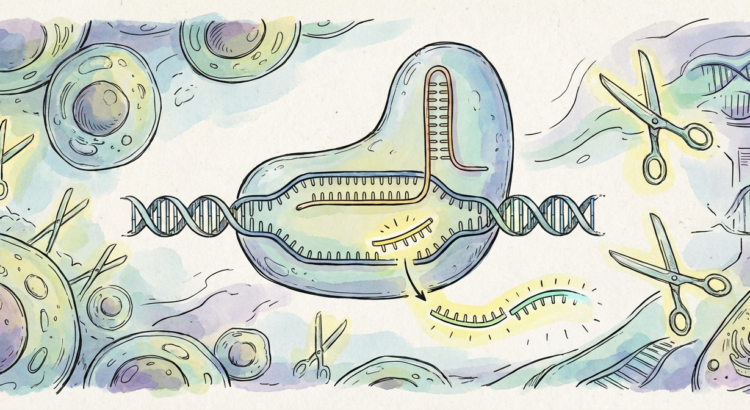
The Reality Check We Need About CRISPR’s Current Limitations
If you’ve been following the news coverage of CRISPR breakthroughs lately, you might think we’re on the verge of editing our way out of every genetic disease known to humanity. The reality, as three papers published this month in Nature Methods, Cell, and Science reveal, is simultaneously more complex and more fascinating than the headlines suggest. These studies don’t just advance our technical capabilities. They expose fundamental challenges that have been lurking beneath the surface of gene editing’s success stories.

The first reality check comes from a comprehensive analysis by Zhang and colleagues at MIT, who systematically examined off-target effects across 127 different CRISPR applications in human cells. Their findings should give pause to anyone assuming we’ve solved the precision problem. While Cas9 and newer variants like Cas12a show remarkable accuracy in controlled laboratory conditions, the researchers documented previously undetected genetic alterations occurring at frequencies of 0.1 to 2.3 percent across various cell types. These aren’t random errors. They follow predictable patterns based on chromatin accessibility and sequence homology that we’re only beginning to understand.
What makes this particularly sobering is that many of these off-target events occurred in genes associated with tumor suppression and DNA repair. The implications aren’t immediately catastrophic, but they explain why regulatory agencies have been cautious about approving germline editing applications. We’re not just editing genes in isolation. We’re intervening in complex regulatory networks where even small perturbations can cascade in unexpected ways.

Prime Editing’s Promise and the Devil in the Details
The second study, led by David Liu’s team at the Broad Institute, offers a more optimistic but equally complex picture of where gene editing technology is heading. Their latest refinements to prime editing (a technique that can make precise insertions, deletions, and substitutions without requiring double-strand breaks) demonstrate success rates of 75-90 percent for correcting disease-causing mutations in cultured human cells. This represents a dramatic improvement over earlier versions that achieved correction rates of 20-30 percent for the same targets.
The technical breakthrough centers on enhanced guide RNAs that better stabilize the prime editing complex and improved reverse transcriptase enzymes that work more efficiently in mammalian cells. But here’s where the details matter: these improvements are highly context-dependent. Success rates vary dramatically based on the target sequence, surrounding chromatin structure, and cell type. Correcting a single-nucleotide mutation in beta-globin genes (relevant for sickle cell disease) works beautifully in hematopoietic stem cells, while similar edits in neuronal cells showed markedly lower efficiency.
This specificity isn’t a bug, it’s a feature that reveals how much we still need to learn about cellular context in gene editing. The authors spent considerable effort characterizing why certain edits work better in different cellular environments, and their findings suggest that successful therapeutic applications will require customized approaches rather than one-size-fits-all solutions.
Epigenetic Editing Opens New Therapeutic Frontiers
Perhaps the most interesting development comes from the third paper, where Konermann and colleagues demonstrate that modified CRISPR systems can achieve stable epigenetic modifications without altering underlying DNA sequences. Using catalytically inactive Cas9 fused with epigenome-modifying enzymes, they successfully activated silenced genes and suppressed overactive ones in animal models of neurological disorders. The implications extend far beyond traditional gene therapy because epigenetic modifications are potentially reversible and can affect multiple genes simultaneously.
Their most compelling results involve treating mouse models of Huntington’s disease by selectively reducing expression of the mutant huntingtin protein while leaving the normal copy largely unaffected. This approach achieved a 60-70 percent reduction in toxic protein levels across multiple brain regions, with corresponding improvements in motor function and neuronal survival. The epigenetic modifications remained stable for at least six months without apparent side effects.
The elegance of this approach lies in its precision: instead of permanently deleting or replacing DNA sequences, it adjusts gene expression levels by modifying the histone proteins and DNA methylation patterns that regulate genetic activity. This could be transformative for dominant genetic disorders where reducing rather than eliminating gene expression is the therapeutic goal.
Delivery Mechanisms: The Unsexy Challenge That Determines Success
All three studies grapple with a challenge that rarely makes headlines but often determines whether promising laboratory results translate into clinical reality: how do you actually get these molecular tools into the right cells in living patients? The delivery problem is particularly acute for tissues like the brain, heart, and skeletal muscle, where current viral vectors show limited efficacy.
The MIT group’s off-target analysis revealed that delivery method significantly influences editing outcomes. Lipid nanoparticles, currently the gold standard for mRNA delivery, showed different off-target profiles compared to adeno-associated virus vectors or electroporation. This isn’t simply a matter of efficiency. The cellular stress induced by different delivery methods appears to alter the repair pathways that cells use to respond to CRISPR-induced DNA breaks.
Recent advances in tissue-specific viral vectors and novel delivery platforms like engineered extracellular vesicles offer potential solutions, but each approach brings its own limitations. The prime editing study achieved its impressive results partly by optimizing delivery for specific cell types, suggesting that therapeutic applications may require parallel innovation in both editing tools and delivery systems.
What These Findings Mean for the Next Decade of Gene Editing
Taken together, these three studies paint a picture of a field that’s maturing rapidly but still grappling with fundamental challenges. We’re moving beyond the initial proof-of-concept phase toward understanding the subtle factors that determine when and why gene editing succeeds or fails. The next generation of therapeutic applications will likely be more sophisticated but also more narrowly targeted than early projections suggested.
The timeline for widespread clinical implementation remains difficult to predict, but these studies suggest we’re approaching gene editing more like precision medicine than a universal tool. Different disorders will require different strategies, different cell types will need customized approaches, and patient-specific factors will likely influence treatment design. This complexity isn’t a limitation. It’s a reflection of how much we’re learning about working with rather than against cellular biology.
If you’re as fascinated by these developments as I am, I’d love to hear your thoughts on which applications seem most promising or concerning. This field generates new questions faster than we can answer the old ones, and that’s exactly what makes following this science so compelling.